ServicesPaint Touch-Ups
Paint Touch-Ups in Garfield, NJ
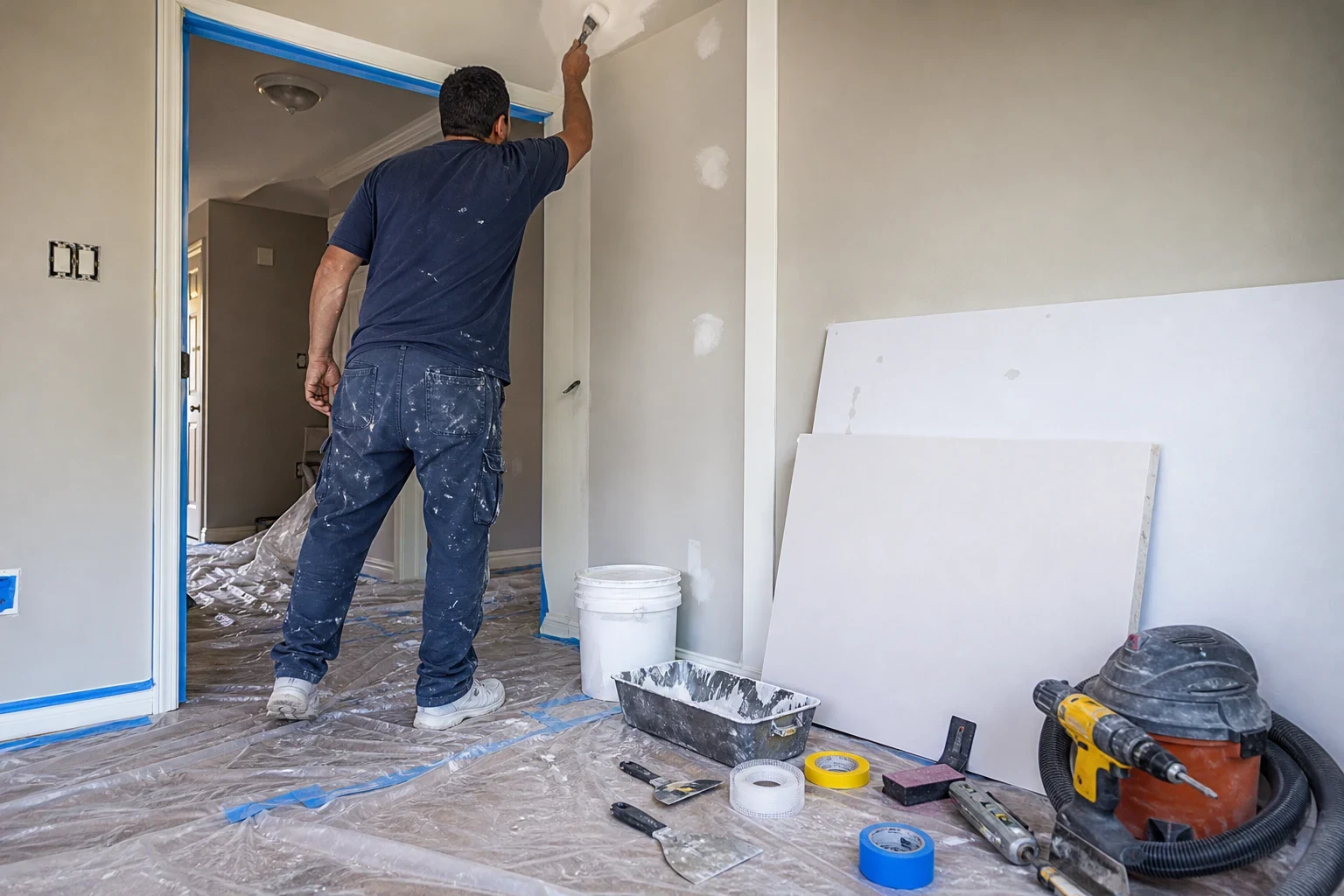
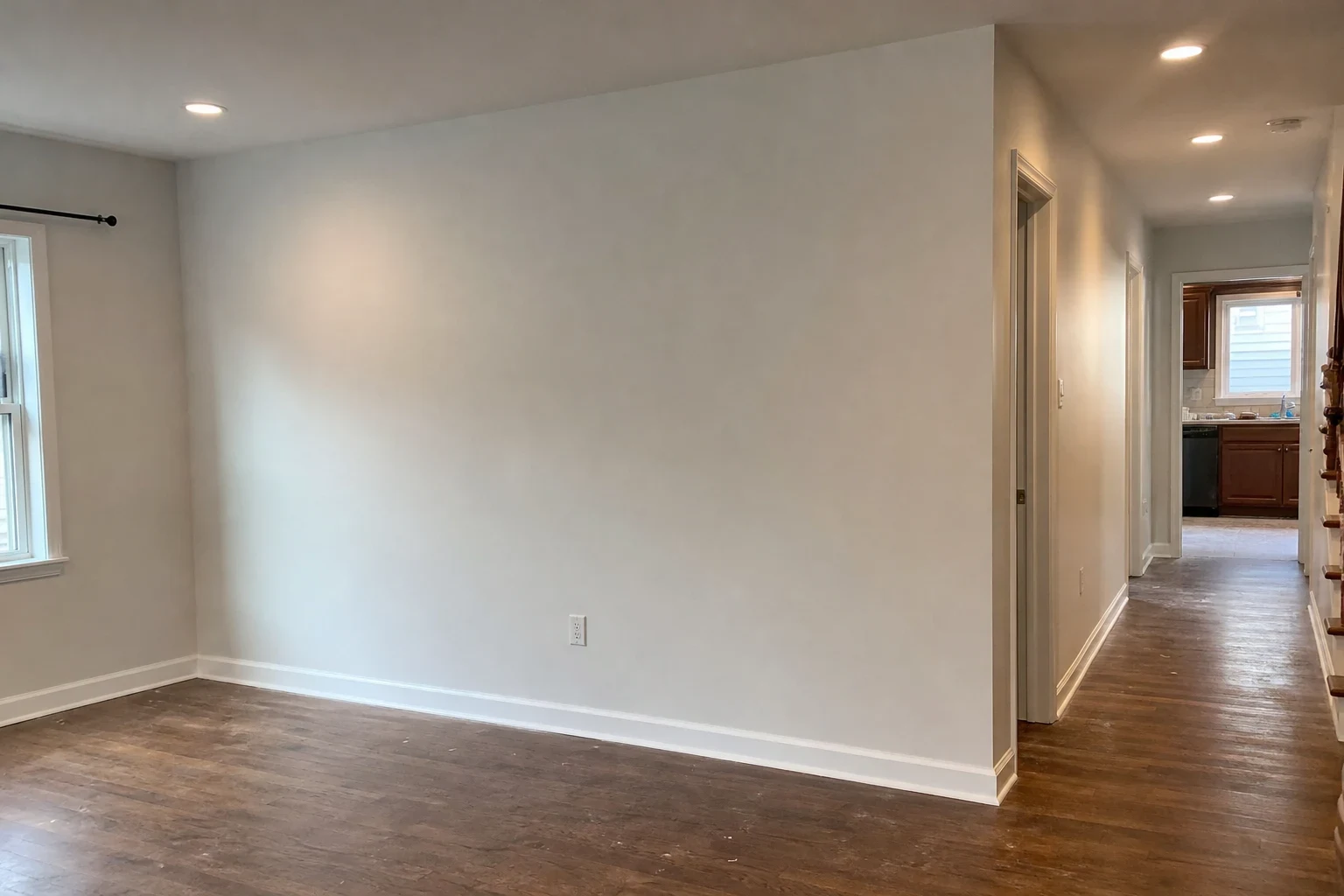
A good paint touch-up should be invisible from across the room. We match the color, the sheen and the roller texture so a repaired patch or a scuffed hallway blends into the wall around it. After the paint cures, we check back to see how it looks in daylight.
When a touch-up is the right call
Most walls do not need a full repaint. They need a few square feet done well: the spot over a fresh drywall patch, a dented corner by the stairs, marks where furniture rubbed for years. A careful paint touch-up handles those areas without moving every piece of furniture out of the room.
The hard part is not the color. Paint on a wall fades and dulls over time, so even paint from the original can may look different once it dries. Sheen is often the bigger giveaway. A flat finish forgives a lot, while eggshell and satin show every edge of new paint when light hits them at an angle. We look at both before we open a can.
If a wall has faded too far for a touch-up to blend, we tell you that up front instead of leaving you with a lighter square on a darker wall.
What our touch-up work includes
- Color and sheen matching
- If you have the original paint, we test it on a hidden spot first. If not, we can take a small chip to a paint store to have it scanned and mixed, then confirm the sheen against your wall.
- Priming over repairs
- Joint compound soaks up paint differently than the wall around it. We seal patched areas with primer so the repair does not show through as a dull spot, an issue painters call flashing.
- Texture matching
- Walls rolled years ago have a light stipple from the roller nap. We use a similar roller so the new paint carries the same texture instead of looking smooth and flat beside it.
- Feathered edges
- We thin the paint out toward the edges of the area, or carry it to a natural break like a corner, so there is no hard line where new meets old.
- A clean work area
- Floors and nearby furniture get covered, and we take the drop cloths, tape and empties with us when we leave.
Signs a wall is ready for a touch-up
A patch that still shows
A drywall patch left bare, or painted without primer, usually reads as a shiny or dull square. Priming and a matched coat finish the job.
Scuffs that won't wash off
Flat paint does not scrub well. When cleaning just burnishes the mark into a shiny streak, fresh paint is the better fix.
Old touch-ups you can see
Earlier spot painting done with the wrong sheen tends to show as blotches in the afternoon light. Those can be corrected with a properly matched coat.
Marks around high-traffic spots
Light switches, door edges, stair walls and the corners where furniture sits collect wear first.
Getting a unit ready to show
For landlords and property managers, a few clean touch-ups between tenants can make a room look cared for without a full repaint.
How a touch-up visit runs
- 1
Look and test
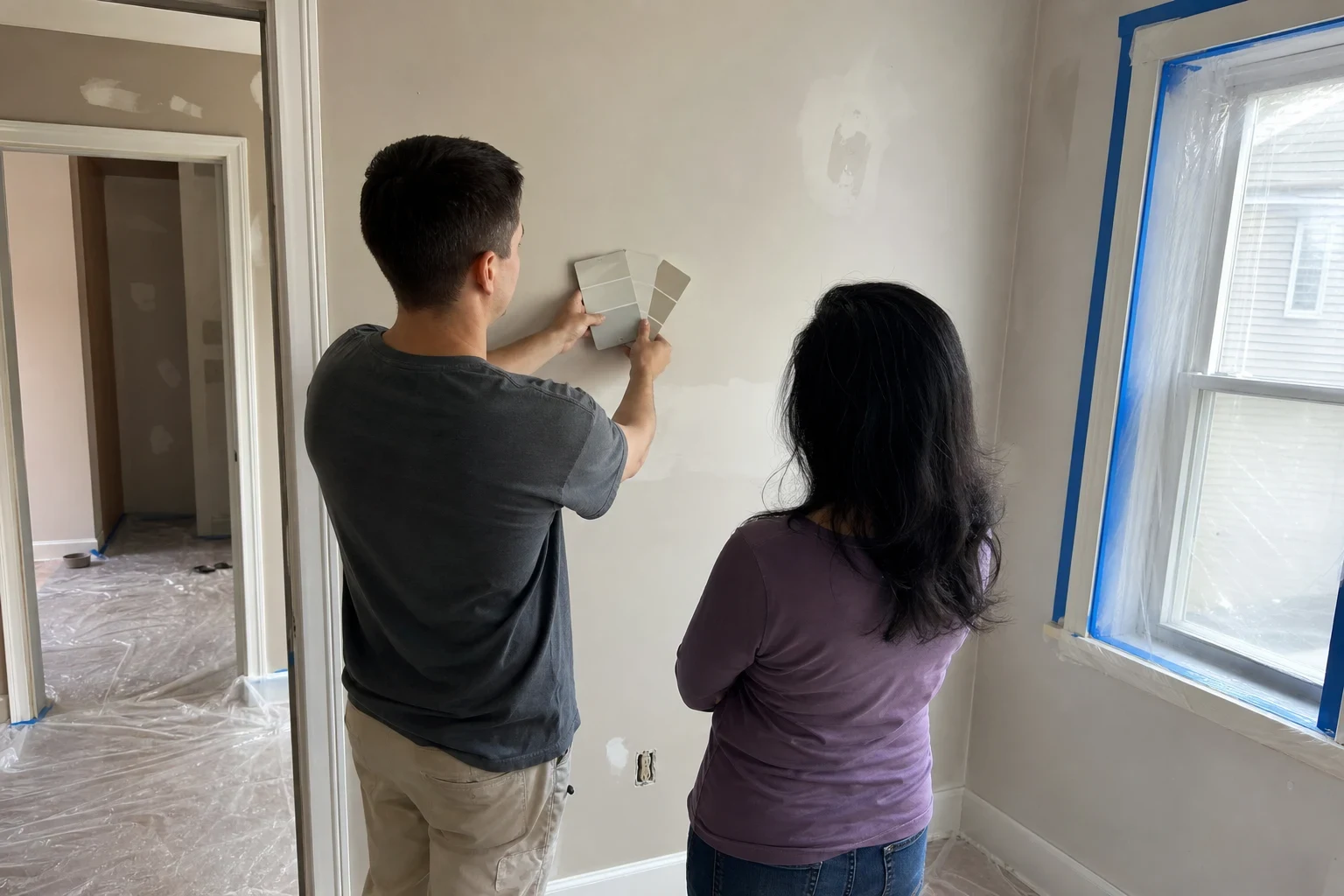
We look at the wall in its normal light, check the sheen, and test the paint on a small hidden area. Then we explain exactly which areas we plan to paint.
- 2
Prepare the surface
We clean off grease and dust, lightly sand any ridges, and prime bare compound or stained spots so the topcoat dries evenly.
- 3
Paint and blend
We apply thin coats with the right roller or brush, feathering out from the repair. Two light coats almost always blend better than one heavy one.
- 4
Check back and explain care
Paint feels dry within hours but keeps curing for a couple of weeks, longer in a humid New Jersey summer. We explain how to treat the area until then, and we check back afterward to see how it looks once fully cured.
What moves the cost of a touch-up
Touch-up work is priced by what the wall needs, not by a flat number per room. We walk through the factors below on the phone and in a written estimate so you know what you are paying for before we start.
- Number of areas
- Three spots in one room take less setup than ten spread across a house. Grouping the work into a single visit keeps it efficient.
- Matching difficulty
- Having the original paint helps. Faded walls, discontinued colors or higher-sheen finishes take more testing to get right.
- Priming and prep
- Bare joint compound, water stains or smoke marks need primer or a stain blocker before color goes on.
- Height and access
- Stairwells, tall ceilings and spots behind heavy furniture take more time and equipment than an open wall at eye level.
Paint touch-up questions
Something not covered here? (973) 755-1802
I have leftover paint from when the room was done. Will it match?
Often it will, but not always. The paint on the wall has aged, and paint in a can can settle or thicken. We test it on a hidden spot first and only use it if it blends once dry.
Why does my touch-up look shiny when the color is right?
That is usually a sheen mismatch or paint applied over unprimed compound. Even the same paint can dry shinier when it is brushed instead of rolled. Priming and using the original application method usually fixes it.
How soon can I wash the wall?
Give it about two weeks before scrubbing. In the meantime, a soft damp cloth is fine for light dust. We go over this with you before we leave.
Can you touch up the paint after you patch my drywall?
Yes, that is one of the most common reasons we do this work. Once the patch is sanded and primed, we paint it to match so the repair disappears.
What should I do with the leftover paint?
Keep it sealed tightly, label it with the room and sheen, and store it somewhere that will not freeze. A garage in a Garfield winter can ruin latex paint, so an indoor closet is better.
Let's make the repair disappear
Tell us which walls you are looking at and whether you still have the original paint. We'll explain what a touch-up can do for that wall and set a time to come by.