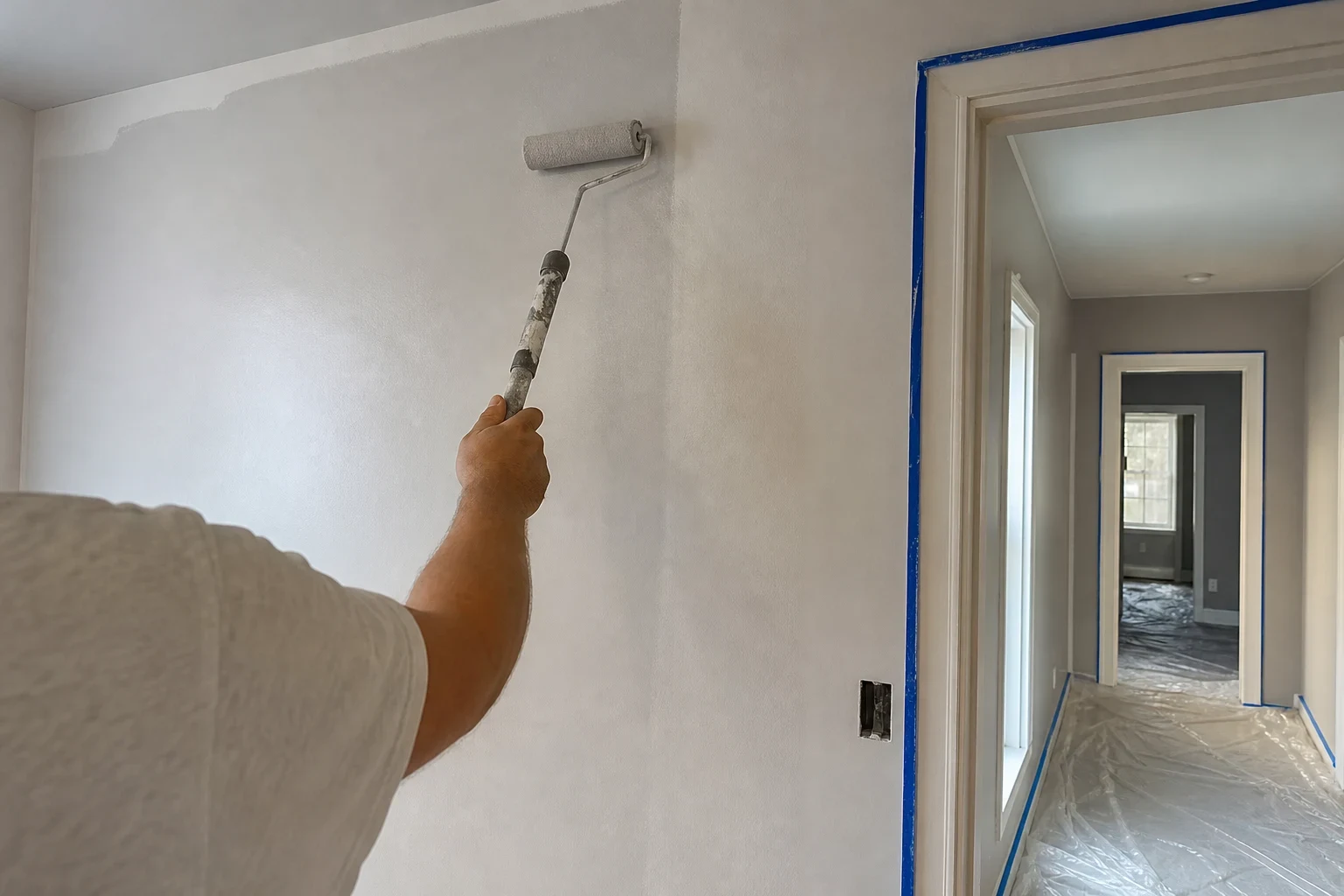
ServicesWall Prep for Repainting
Drywall Prep for Repainting in Garfield
A fresh coat of paint shows every dent, crack and old patch on a wall. We repair the drywall, sand it smooth and prime the repaired areas, so the room is ready for you or your painter. After the job, we check back to see how the surface is holding up.
The work that happens before the paint
We should be clear about what this page covers. We do not take on full-room repainting. Our work is the drywall underneath: repairing damage, finishing seams, sanding and priming, so the surface is ready for the final coats. For small areas over our own repairs, we also do paint touch-ups.
Paint hides less than people expect. A satin or eggshell finish catches light from a window and shows a patch that looked invisible when it was dry and white. Getting the wall right first is what separates a room that looks newly painted from one that looks patched and painted.
When we finish, we tell you how long the compound and primer need before paint goes on, and we follow up later to see how the wall looks once it is painted.
What we do to get your walls ready
Repairs to dents, holes and cracks
We cut out or fill damaged drywall, tape where it is needed and build the patch up in thin coats. Thin coats shrink less and sand flatter than one heavy fill.
Seam and corner refinishing
Lifted tape, bubbled seams and cracked inside corners get cut back and refinished. These show badly under fresh paint, so we treat them before the painter arrives.
Skim coating where the surface is rough
Walls with torn paper, old adhesive or many small repairs may need a thin skim of compound across the whole area. That gives the paint one even surface instead of a patchwork.
Sanding with dust control
We sand by hand and with vacuum-attached sanders, then wipe the walls down. Our surface preparation and sanding page explains this step in more detail.
Primer on repaired areas
Bare compound absorbs paint differently than painted drywall. A coat of primer over the repairs keeps the finish from looking dull or blotchy in those spots, an effect painters call flashing.
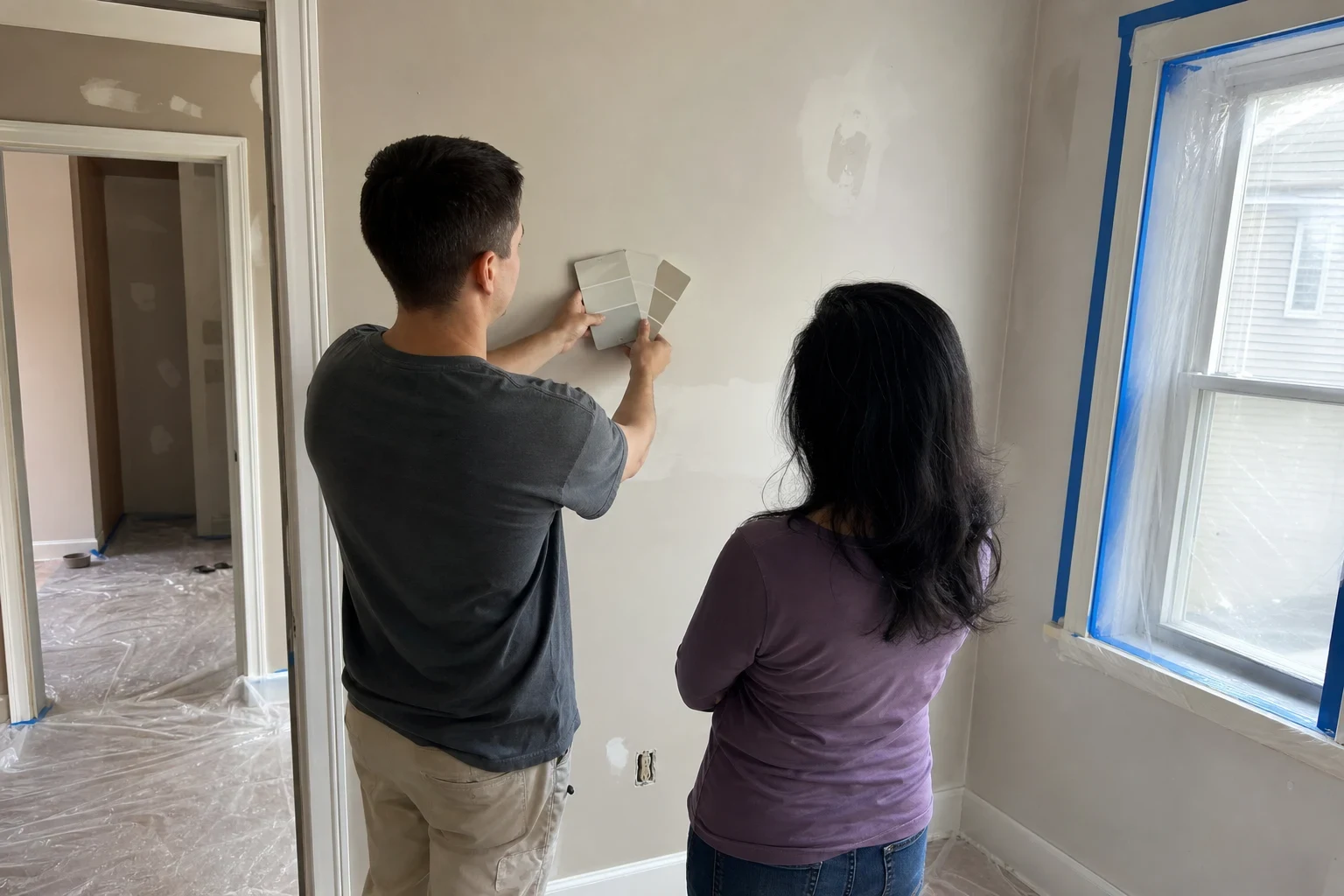
Signs your walls need attention before painting
- Patches visible in side light
- Hold a flashlight flat to the wall. Ridges, halos or dips you see now will stand out even more under paint.
- Rows of nail pops
- Small round bumps along a stud line are fasteners that have backed out. We reset them and refinish over top, since paint alone will crack around them again.
- Fine cracks around doors and windows
- Cracks that run from the corners of openings usually return if they are just caulked and painted. They need tape and compound.
- Torn paper left by hardware or wallpaper
- Exposed brown, fuzzy paper bubbles up when wet paint touches it. It must be sealed and skimmed first.
- Layers of small repairs
- A lot of older Garfield homes have walls patched by several past owners. Before changing colors, it often pays to even them all out together.
What happens on a prep job
- 1
Start with a phone call
Tell us which rooms you plan to paint and what you notice on the walls. We arrange a time to see them in person.
- 2
A walk-through with a work light
We check the walls with raking light, the way paint will reveal them, and show you what needs work. You get a clear written list of the job.
- 3
Covering the room
We cover floors, move or wrap furniture and seal doorways where dust could spread. The work area stays clean the whole time.
- 4
Repair, sanding and primer
Compound goes on in coats with drying time between, so most rooms take more than one visit. When the surface is sanded smooth, we prime the repaired spots.
- 5
Care tips and a follow-up
We tell you how long to wait before painting and what to look for. Once the room is painted, we call to ask how the walls look and return to see anything that shows.
What sets the price of wall prep
Price depends mainly on how much repair the walls need, not just how big the room is. A clean wall with a couple of nail holes goes fast. Cracked seams and torn paper call for several coats, drying time and return visits. We price each item after seeing the walls.
- How much damage there is
- Most of the labor comes from the number and size of repairs and whether any seams need new tape.
- Patching spots or skimming the wall
- A skim coat over a full wall costs more than patching spots, but it often looks better when repairs are spread out.
- Ceiling height and access
- Stairwells, high ceilings and furnished rooms take more time to set up and cover.
- Drying time and return visits
- Compound dries slower in humid summer weather, which can mean an extra visit between coats.
Questions about preparing walls for paint
- Will you put the final color on the walls?
- That part stays with you or your painter. Our work ends at drywall that is repaired, sanded flat and primed where we worked. If a few small spots over our own repairs need color, our paint touch-ups cover that.
- How long should I wait before painting?
- Primer is usually ready for paint the same day it dries. If we skimmed large areas, give the compound a full day or more to dry first, longer in humid weather. We give you the timing for your walls before we leave.
- Will the repairs show through the paint?
- They should not if the surface is sanded flat and the repairs are primed. The most common cause of patches showing is painting straight over bare compound. That is why priming is part of our work.
- What should I tell my painter?
- Let them know which areas were repaired and primed. We are glad to write that down for you. A painter who knows the wall is sound can go straight to finish coats.
- Do you check the walls after they are painted?
- Yes. We follow up once the room is painted to ask how it looks. If a seam or patch shows under the new color, we come back to look at it with you.
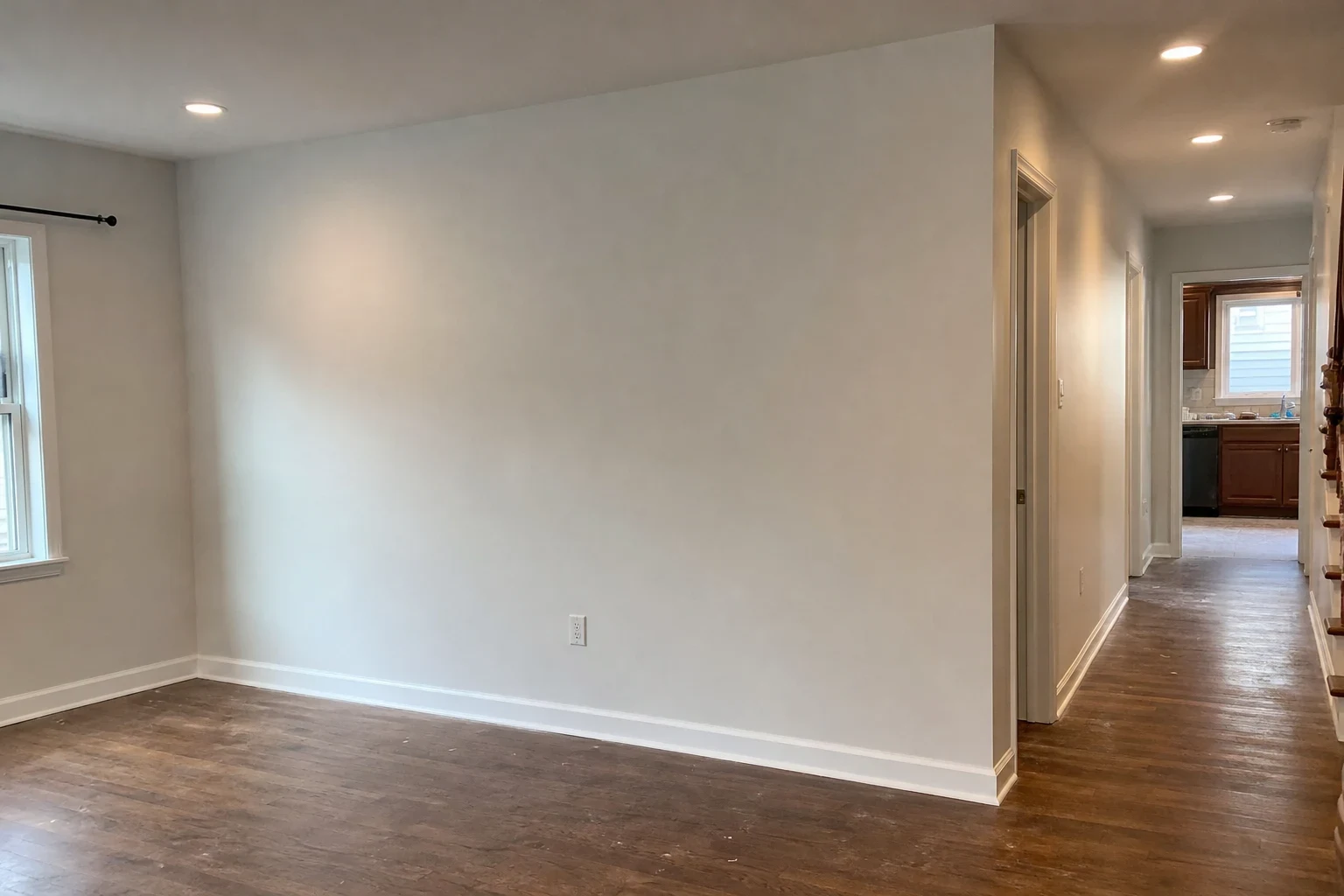
Have the walls ready before you paint
Let us know which rooms are getting new paint and what you notice on the walls. We work in Garfield, Lodi, Elmwood Park and nearby towns.