ServicesDrywall Finishing
Drywall Finishing in Garfield
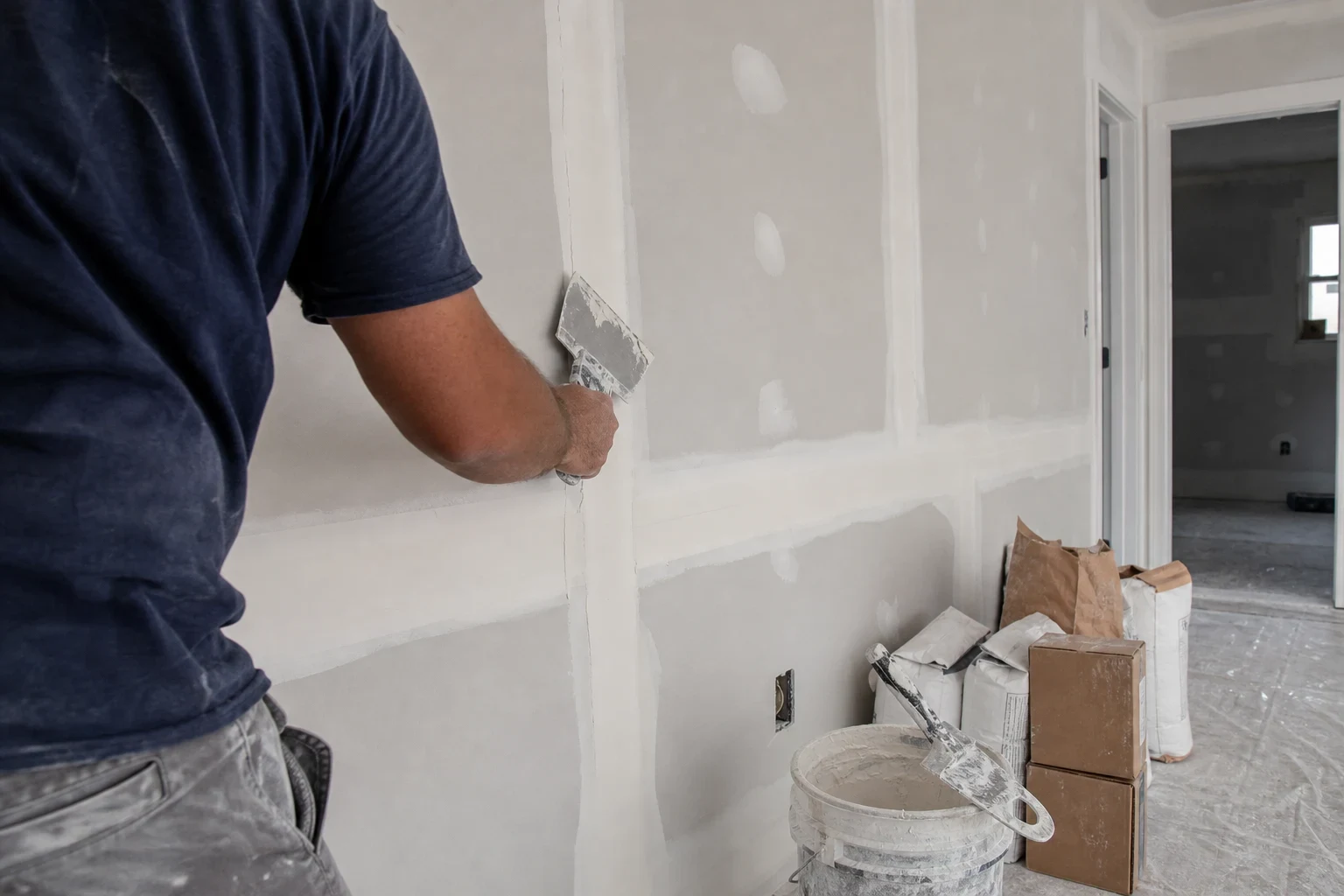
We tape, coat and sand new or repaired drywall until the seams and screws disappear under paint. We match the level of finish to the light in the room, keep a clean work area, and check back once the compound has cured and the walls have seen a few days of use.
What drywall finishing is and when you need it
Hanging drywall gets the sheets on the framing. Finishing is everything that follows: embedding tape in the joints, setting corner bead, filling fasteners, and building up thin coats of joint compound that are sanded flat. It is slow, patient work, and it decides whether a wall looks like one surface or a grid of sheets.
You need finishing when new drywall goes up, when a section has been replaced, or when an earlier finish shows ridges, bubbles or flashing through the paint. If the drywall still has to be installed, our drywall hanging page covers that part of the job.
Our approach is simple. We finish the work, then we come back to look at it with you once it has dried and settled, and we explain how to treat the new surface so it stays smooth.
What our finishing work includes
- Taping every joint
- We embed paper tape in a bed coat on flat seams and inside corners. Paper holds up well to the slight movement walls see over a year. Where a fast, strong first coat helps, we use setting-type compound under the tape.
- Corner bead and outside edges
- Outside corners get metal or paper-faced bead, set straight and plumb, then feathered out. A crooked corner is one of the first things the eye catches, so we sight down each one before coating.
- Fill and finish coats
- Screw heads and seams get two or three more thin coats, each wider than the last, using a lighter topping compound that sands cleanly. Thin coats dry evenly and shrink less than one heavy pass.
- Sanding and dust control
- We sand between coats and at the end with fine abrasive, check the surface with a work light held at a low angle, and touch up anything that throws a shadow. Floors are covered, doorways are sealed off where needed, and we vacuum before we leave.
- Level of finish matched to the room
- A closet or garage wall does not need what a long hallway with a big window needs. For walls hit by raking light or planned for a gloss paint, we can skim the whole surface for a level 5 finish. We explain the difference before we start.
Signs your drywall needs finishing work
Visible seams under paint
If you can see the lines of the sheets, especially when the sun comes across the wall, the joints were not feathered wide enough or were left high.
Nail and screw pops
Small round bumps or dimples in rows usually mean fasteners that were underset or never filled properly. They need to be reset and recoated.
Bubbled or loose tape
Tape that lifts or blisters was often laid in too little compound. It will not fix itself, and painting over it only hides it for a while.
Dull and shiny patches
Flashing, where paint looks different over the joints than over the paper face, points to uneven porosity. A proper finish and primer fixes it, and so can a skim coat.
Rough or wavy corners
Inside corners with ridges or outside corners that wander are finishing problems, not framing problems, and they are worth correcting before the room is painted.
What moves the cost of drywall finishing
Finishing is priced mainly by the time it takes, and time depends on the surface and the standard you want. We walk you through each factor on the estimate so the number makes sense before we start.
Square footage and layout
More wall area means more joints, but a room with many corners, soffits or window returns takes longer per foot than a plain open wall.
Level of finish
A basic finish for a utility space is quicker than a full skim coat for walls under strong light or glossy paint.
Ceilings and height
Ceiling joints and tall walls are slower to coat and sand, and some need scaffolding or extra setup.
Condition of the hanging
Wide gaps, uneven sheets or badly set screws add filling and correction work before finishing can start.
Primer and texture
Priming the finished surface or matching an existing ceiling texture adds steps, and we list them separately so you can choose.
How a finishing job runs
- 1
A walk-through first
We look at the drywall, the lighting and how you plan to use the room, then talk you through the level of finish that makes sense. You get a clear written estimate before work begins.
- 2
Protect and tape
We cover floors and nearby furniture, set corner bead and run the tape coat. This first day is mostly about getting everything flat and straight.
- 3
Coats with drying time between
Each coat needs to dry before the next. In a humid Garfield summer that can take longer, so we plan the visits around real drying, not a fixed clock. Most rooms see work over several days.
- 4
Final sanding and inspection
We sand, check every wall with a low-angle light, spot-fix and prime if that is part of your job. Then we clean up so the room is usable that evening.
- 5
We check back
Once the compound has fully cured and the house has gone through some heat and humidity changes, we follow up to look for any shrinkage or hairline cracks and answer questions on care before you paint.
Drywall finishing questions
How long does drywall finishing take?
A single room usually runs across several days because each coat has to dry before the next one goes on. Setting compound speeds up the early coats, but rushing the finish coats leads to shrinkage and visible seams. We give you a realistic schedule at the walk-through.
What is a level 5 finish, and do I need it?
Level 5 means the whole surface gets a thin skim coat once the joints are finished, so the paper and the compound take paint the same way. It is worth it on walls with raking light, large windows or semi-gloss paint. For most bedrooms and closets a level 4 finish looks right and costs less.
Will there be dust all over my home?
Sanding makes fine dust, so we work to contain it. We cover floors, seal off doorways with plastic where it makes sense, sand carefully and vacuum at the end of each day. You should come home to a clean work area, not a film on every surface.
How soon can I paint once you finish?
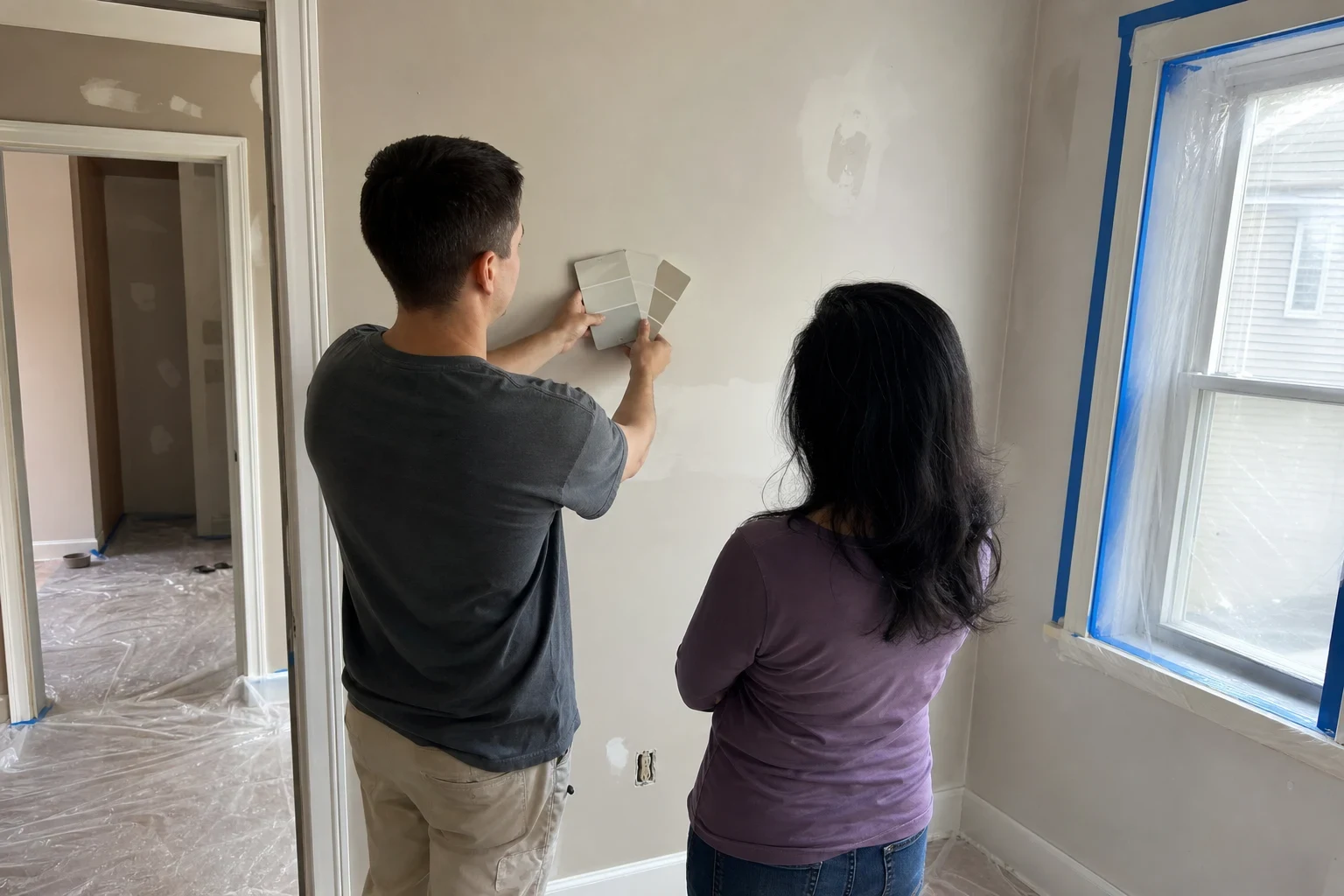
When the compound is fully dry and primed, the wall can be painted. We will tell you when it is ready and which kind of primer suits new drywall. If you only need small areas blended, our paint touch-ups service can cover that.
Why do you come back once the job is done?
Joint compound keeps curing for a while, and seasonal changes in humidity can show a hairline crack or a slight dip over a fastener. Checking back lets us catch that early while it is a quick fix, and it gives you a chance to ask how to clean and care for the new walls.
Will you take over finishing on drywall another crew installed?
We will. Before any tape goes on, we inspect the installation for loose sheets, wide gaps and screws that have torn through the paper face, and we correct those first. Coating over a weak installation just buries the flaws until they crack or telegraph through the paint.
Ready for walls that read as one smooth surface
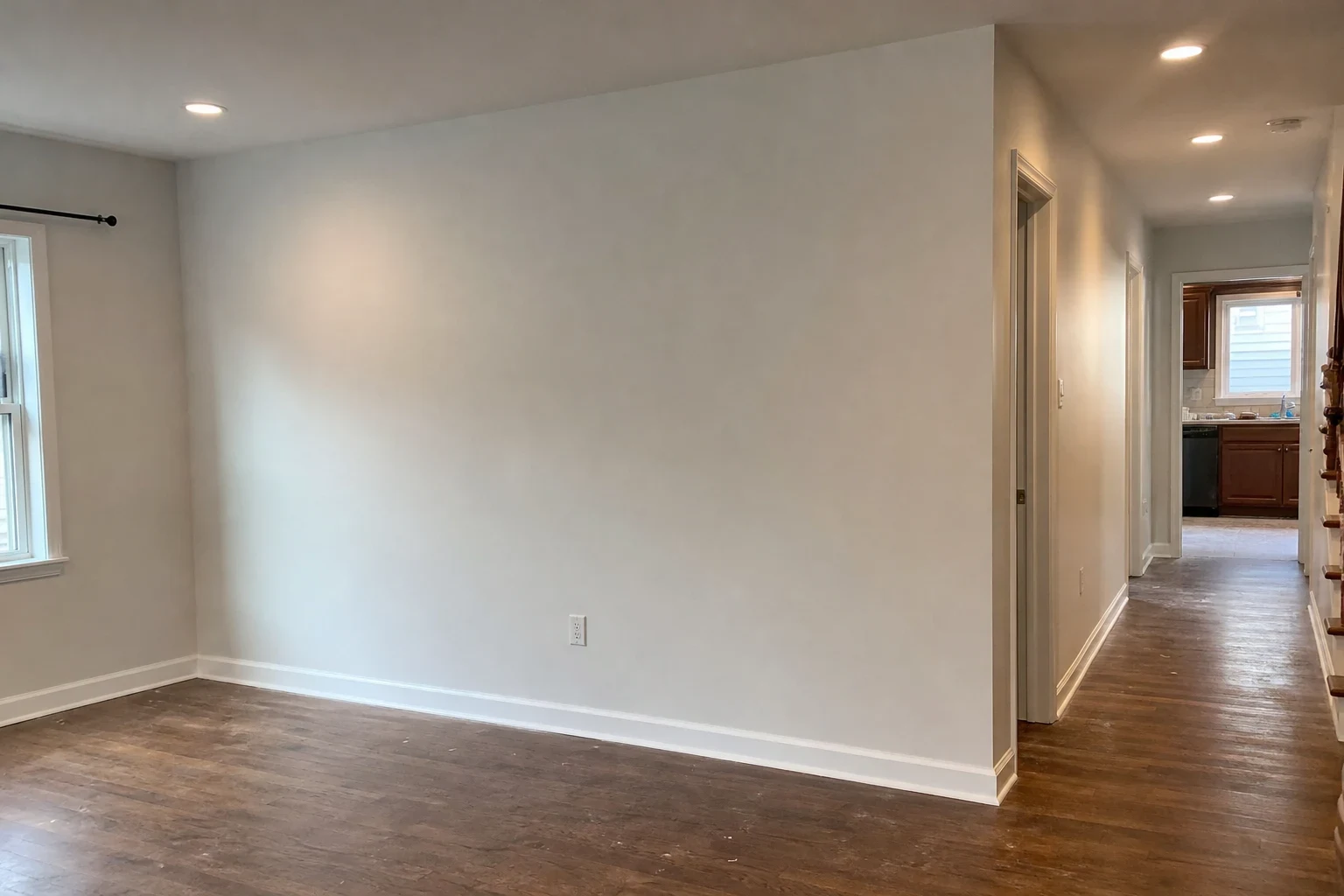
Tell us about the room, the drywall and the light it gets, and we will explain the finish we would recommend. We serve Garfield and nearby towns including Lodi, Elmwood Park, Clifton and Saddle Brook.