ServicesDrywall Patching
Drywall Patching in Garfield
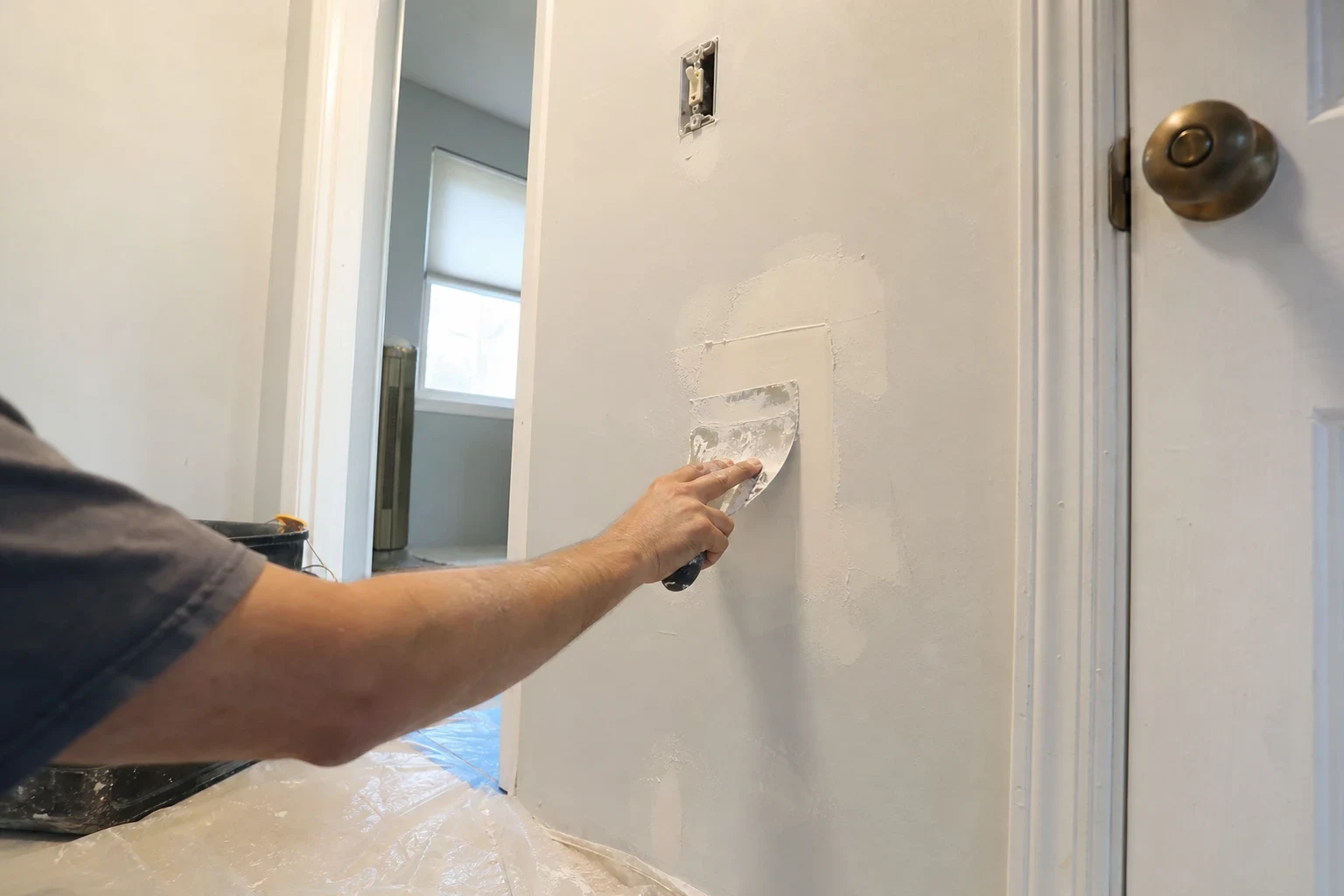
A hole in the wall is a small problem until a quick patch starts to show through the paint. We cut each repair clean, back it properly and feather the compound wide so it sits flat. After the job, we check back to see how it has settled.
When a patch is the right repair
Patching suits damage that is local and contained: a doorknob that went through the wall, holes left by a TV mount, a fist-sized gouge from moving furniture, or a dented outside corner. The surrounding drywall is sound, so there is no reason to replace a full sheet.
The difference between a patch you notice and one you forget is mostly in the backing and the feathering. Small holes get a mesh or paper-faced patch. Anything larger gets a cut-out square, wood or drywall backing strips behind it and a new piece screwed in, so the repair cannot flex or crack when a door swings into it again.
If the damage spreads across several feet, or the board is soft from water, a patch is the wrong answer. In that case we will tell you so and point you to drywall repair or drywall hanging instead.
What our patching work includes
- Clean cut-out of damaged board
- We square off torn paper and crushed gypsum with a utility knife so the new piece has firm edges to meet. Ragged edges are what make patches bulge later.
- Backing that holds
- Larger openings get backing strips fastened behind the wall. The new drywall is screwed to that backing, not just glued in with compound.
- Tape and layered compound
- We use a setting-type compound for the first coat because it hardens chemically and shrinks less. Finish coats go on lighter and wider, often a foot or more past the hole.
- Texture matching
- Many walls are not perfectly smooth. We look at the surrounding surface under raking light and match its texture, whether that is a light orange peel or the slight roll of older finish work.
- Sanding and primer
- Each patch is sanded flat and primed so the repair takes paint the same way as the wall around it. If you want color on it too, our paint touch-ups service covers that.
- A clean work area
- Floors are covered, sanding dust is contained and vacuumed, and offcuts leave with us.
Signs a wall needs patching
A hole you can see through
Doorknob strikes and accidental punches crush the gypsum core. Filling them with spackle alone almost always leaves a sunken spot.
An old patch showing again
A ring, a hairline crack or a raised square under the paint usually means the first patch had no backing or was not feathered wide enough.
Anchor and mount holes
Removing shelves, curtain rods or a wall-mounted TV leaves torn paper and widened holes that need more than a dab of filler.
Dented or cracked corners
Outside corners take bumps from carts and furniture. Once the metal bead is bent, it needs to be reset or replaced before the corner will look straight.
Torn face paper
Peeled tape or wallpaper removal can leave brown paper exposed. Painting over it causes bubbles, so it needs sealing and a skim first.
What affects the cost of patching
Patching is priced by the work each hole actually needs, not a flat number per visit. We explain the reasoning on the phone and give you a written estimate before anything is cut.
Size and number of patches
A handful of anchor holes is a different job from a cut-out that needs backing. Grouping several patches in one visit is usually more economical than spreading them out.
Texture and finish level
Matching an existing texture or a smooth, high-sheen wall takes more coats and more careful sanding than a flat surface.
Location and access
Stairwells, high walls and tight spots behind fixtures take longer to protect and reach.
What is behind the wall
Wiring, a stud right at the edge of the hole or old plaster behind the drywall can change how the backing goes in. In many older homes around Garfield we find mixed materials and plan for them.
How a patching job runs
- 1
A phone conversation first
You describe the damage and roughly how many spots there are. We talk through the likely approach and set a time to come look or start.
- 2
Look, protect and cut
We confirm the repair plan with you, lay drop cloths and cut out the damaged board. Backing goes in where the opening calls for it.
- 3
Coats with proper drying
Compound goes on in thin layers, each allowed to set before the next. Small patches can sometimes be finished in one visit with fast-setting compound; larger ones usually need a return trip.
- 4
Sand, prime and clean up
We sand under a work light to catch ridges, prime the patch and vacuum the area before we leave.
- 5
Our check-back
A few weeks later we get in touch to ask how the patch looks once you have lived with it. We also explain what to watch for and how to care for the repaired wall.
Drywall patching questions
Will I be able to see the patch?
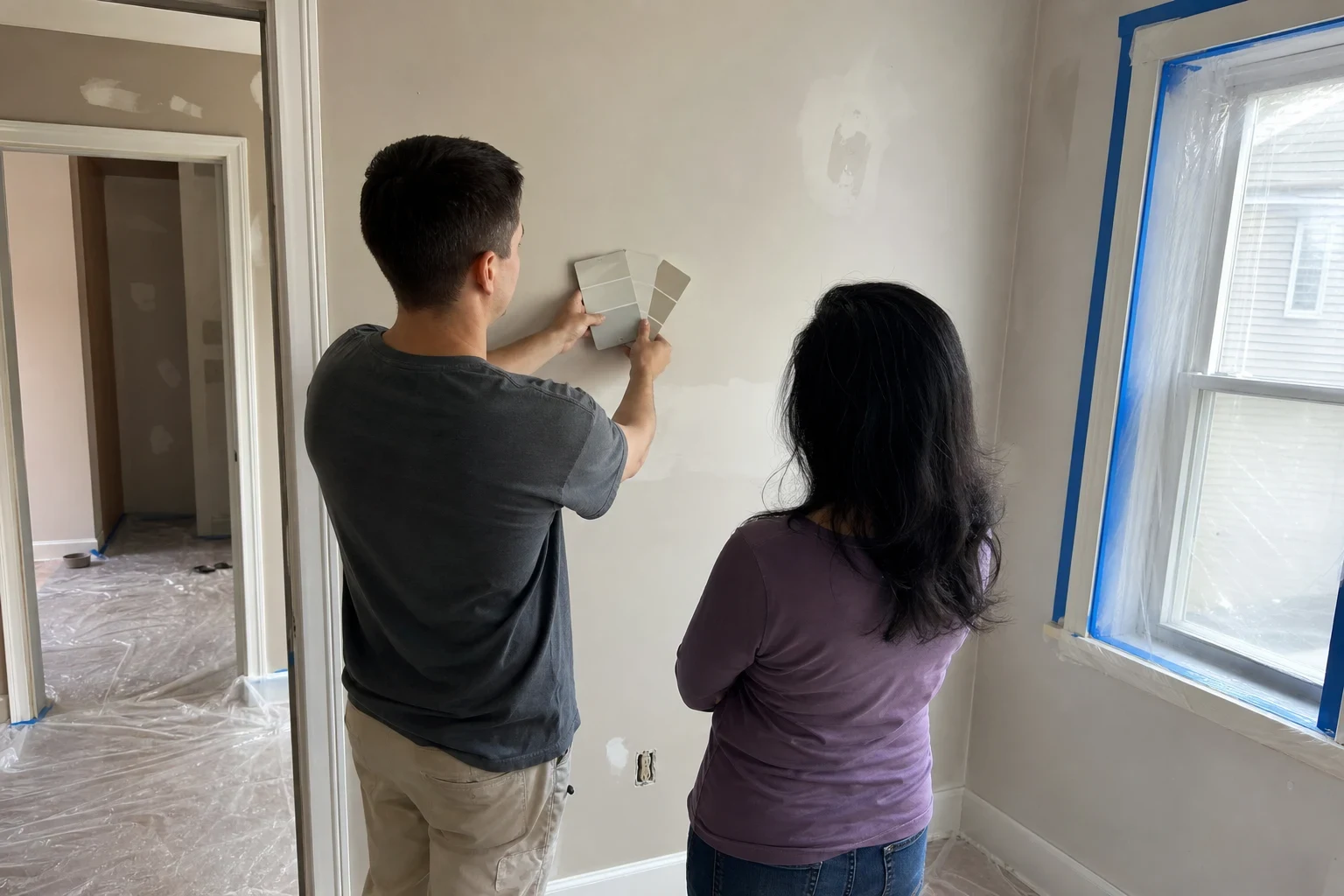
Done properly, it should disappear once painted. The keys are a flat backing, compound feathered well past the hole and texture matched to the wall. Sheen matters too, so paint on a primed patch should match what is already on the wall.
How long does a patch take?
Small holes are often finished in one visit using setting compound. Larger cut-outs need drying time between coats, so plan on a return trip. We tell you which to expect during the phone call.
Do you paint the patch?
We prime every patch so it is ready for paint. If you would like the color matched and applied, our paint touch-ups service handles that as a separate step.
How messy is it?
Sanding makes fine dust, so we cover floors and nearby furniture and keep the work area contained. We vacuum before leaving, and you should not find a white film across the room afterward.
What happens after you finish?
We check back once the compound has fully cured to ask how the patch looks. We also explain simple care: let fresh primer and paint cure before hanging anything, and consider a door stop where a knob caused the original hole.
Get that hole off your list
Tell us what happened and how many spots need attention. We will explain the right patch for each one and give you your quote by phone.