ServicesDrywall Hanging
Drywall Hanging in Garfield
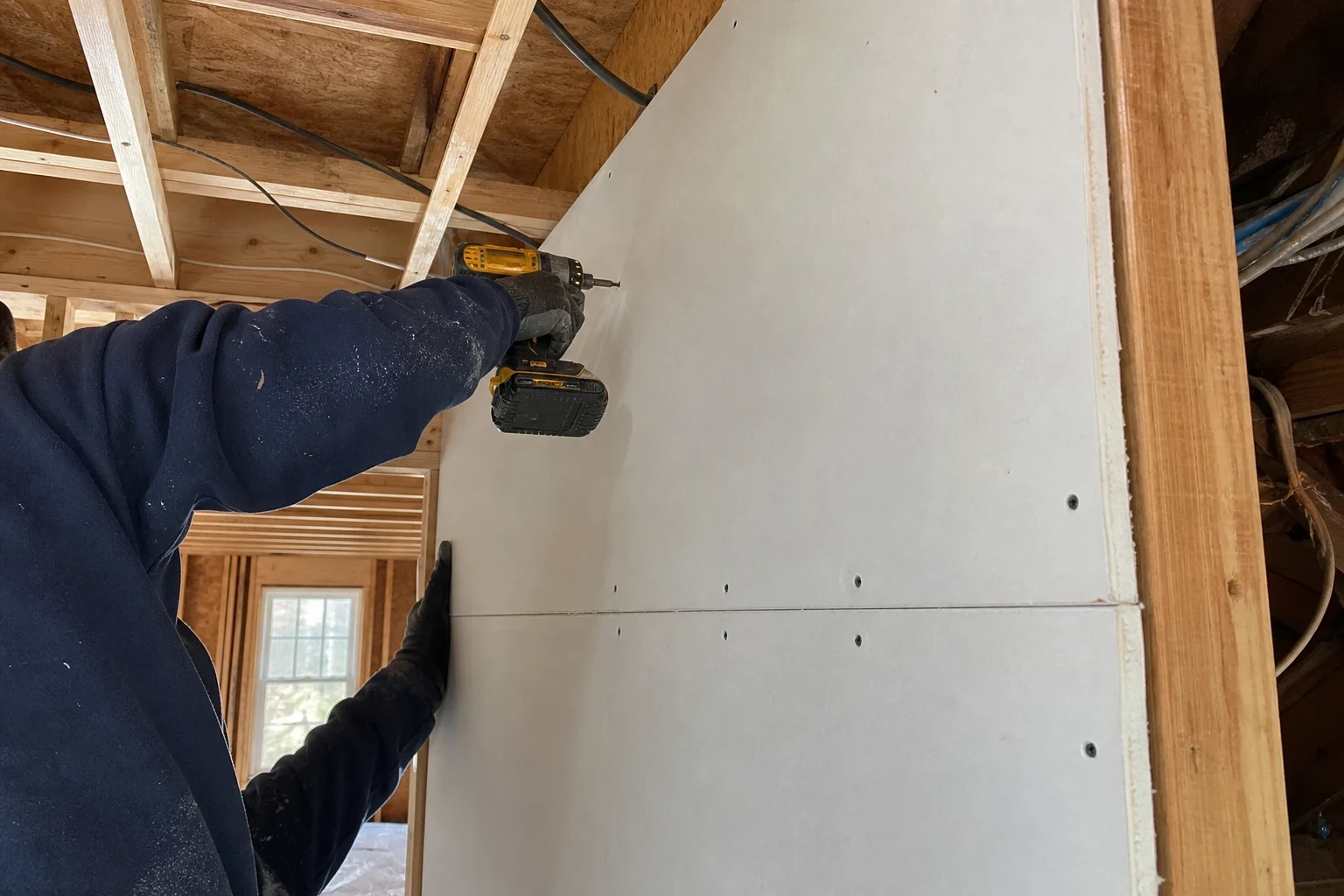
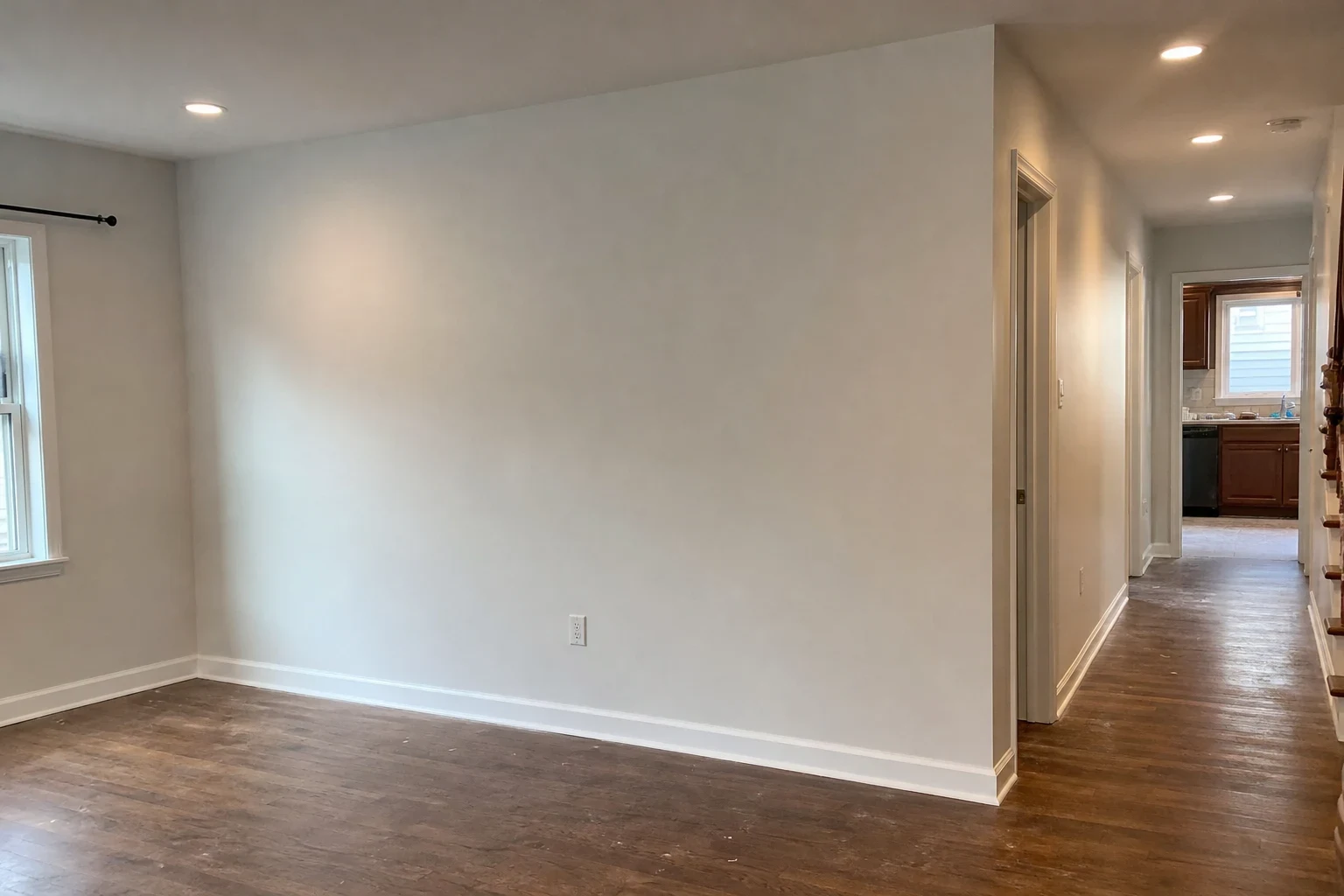
Fresh gypsum board goes up on your framing, chosen for how each room is used and laid out so the seams stay few and finish flat. Once the work is complete, we return to see how it has settled and explain how to look after the new surface.
When new board is the right call
Drywall hanging means fastening full sheets of gypsum board to bare framing. It is the right choice for a finished basement, a converted attic, a wall opened up for wiring, or a room where the old plaster or board is too far gone to patch. If the damage is limited to a few spots, drywall repair or drywall patching usually makes more sense, and we will tell you so.
The quality of a finished wall is decided at this stage. Board that is hung tight, fastened at the right spacing and laid out with few butt joints takes tape and compound cleanly. Board that is rushed shows every flaw later, no matter how good the finishing is.
Once the board is up, we can carry the job straight into drywall finishing so one crew is responsible for the whole surface.
What the work includes
- Framing check before the first sheet
- We look at the studs and joists for bowed lumber, uneven spacing and anything out of plane. Older framing often needs a little shimming so the new wall reads flat under light.
- Board matched to the room
- Half-inch board is standard for most walls, and 5/8-inch is stiffer on ceilings where sag is a concern. Bathrooms and basements get moisture-resistant board. Where code calls for fire-rated board, such as a garage wall shared with living space, we use it.
- Layout that limits seams
- We hang the longest sheets the room allows, stagger the joints and keep butt seams away from the middle of ceilings and long sightlines. Fewer, better-placed seams are easier to hide.
- Fastening at proper spacing
- Screws go in at the correct interval and depth, snug to the paper without tearing it. That is one of the simplest ways to prevent nail pops later.
- Cutouts and corners
- Outlets, switches, vents and windows are cut cleanly, and corner bead goes on straight so outside corners stay crisp.
- A clean work area each day
- Floors are covered, offcuts are carried out, and dust is kept to the room we are working in.
Signs your project needs new drywall
Walls opened down to the studs
After insulation or electrical work, the cavity is exposed and needs new board to close it up properly.
Crumbling or loose plaster
When plaster has let go of its lath across a large area, patching only chases the problem. Covering or replacing it with drywall gives you a sound surface.
Water-damaged sections
Board that stayed wet tends to soften, stain and grow mold behind the face. Once the source has been fixed, the affected sheets should come out and new ones go in.
An unfinished basement or attic
Raw framing becomes usable space once it is closed in with the right board for the conditions.
Sagging ceiling panels
Ceilings hung with thin board or too few fasteners can droop between joists. Rehanging with stiffer board and proper fastening corrects it.
What affects the price
We price each hanging job from the room in front of us. Square footage counts, and so do the kinds of board, how high the work goes and the shape the framing is in. Every line on the written estimate is explained so you can see what drives the cost.
Room size and ceiling height
Larger square footage takes more board and more hours. Tall or vaulted ceilings call for scaffolding and an extra pair of hands.
Type of board
Moisture-resistant, fire-rated and 5/8-inch board cost more than standard half-inch and weigh more to carry and lift.
State of the framing
Straight studs at even spacing go up fast. Framing that is out of plane or irregular has to be shimmed or furred first.
Access and tear-out
Narrow stairways, upper floors and old material that has to be removed and hauled off all take extra time.
How far the finishing goes
Hanging only costs less than hanging plus taping, compound and sanding to a surface ready for paint.
How a hanging job runs
- 1
Walkthrough and estimate
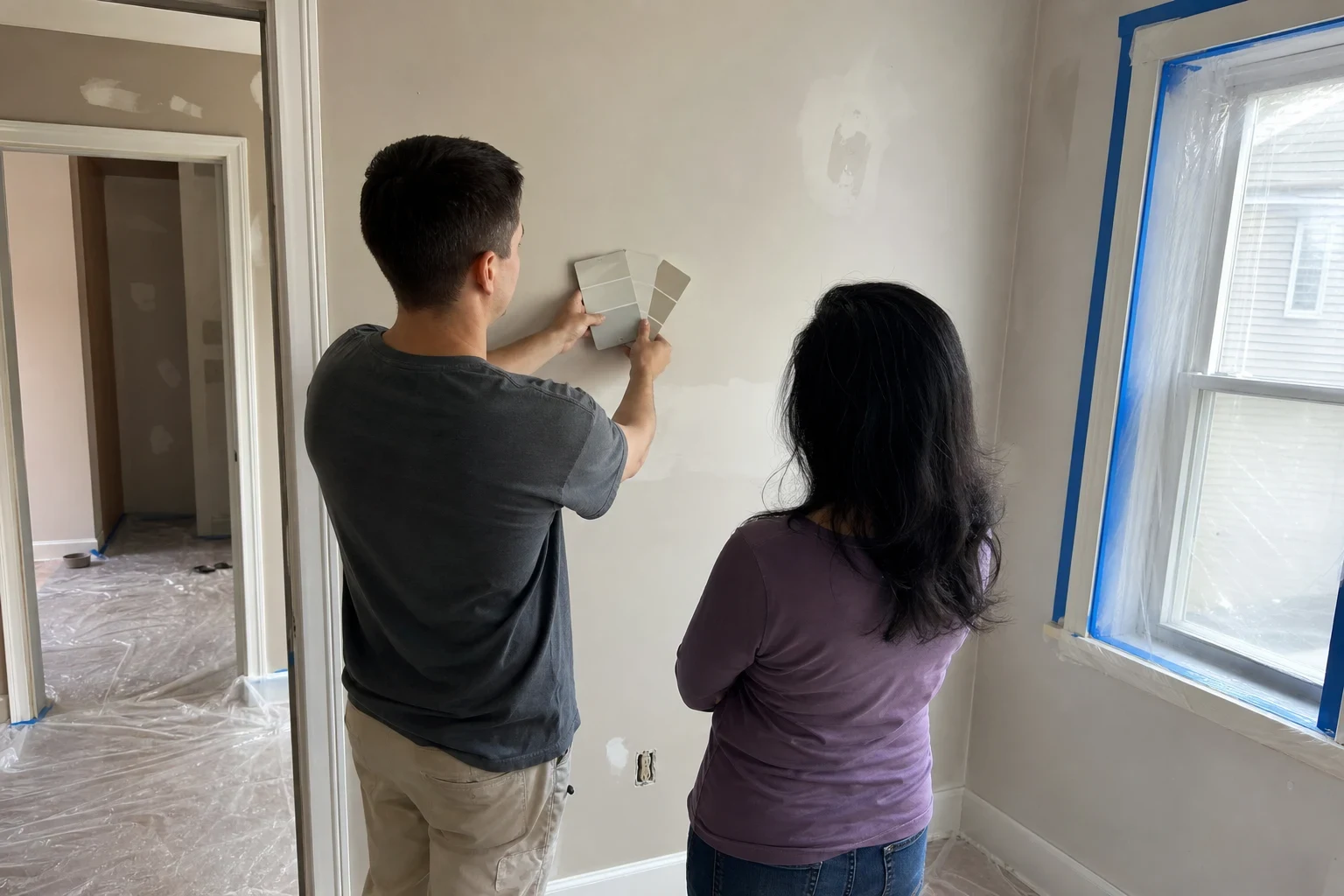
We look at the space, measure it and talk about how the room will be used. You get a written estimate that spells out the board types and the scope.
- 2
Delivery and prep
Board is brought in and left to sit in the room so it adjusts to the indoor air. We cover floors and protect anything that stays in the space.
- 3
Hanging day
Ceilings go up first, then walls, so the wall sheets help support the ceiling edges. We check each sheet for flatness and fasteners before moving on.
- 4
Finishing or handoff
If we are also handling taping and compound, finishing begins next. If not, we walk you through the hung surface so you know it is ready for the next trade.
- 5
Our check-back
A few weeks after completion, we follow up to see how the walls are settling and answer any questions. We also explain what small changes are normal in the first year, such as a hairline at a corner during dry winter heat.
Common questions about hanging drywall
Can new drywall go over my old plaster walls?
In many cases, yes. When the plaster is sound and fairly flat, covering it with thin board can spare you the mess of tearing it all out. When it is loose or heavily cracked, we usually suggest removing it first. We show you what we see at the walkthrough.
How long does an average room take?
Hanging one typical room usually takes about a day. Taping and finishing add several days more, since every coat of compound has to dry. Your estimate comes with a realistic schedule.
Why does the board sit in the room before you hang it?
Gypsum board can pick up or give off a bit of moisture while it adjusts to a new space. Letting it rest indoors first cuts down on movement once it is fastened, so the seams stay tight through humid summers and dry winters.
Should my basement get moisture-resistant board?
We suggest it for most basements and bathrooms. It handles damp air better than standard board, but it is not made for places that get wet directly, such as inside a shower.
What should I keep an eye on after the job?
Hold off on primer until the finish has fully cured, and try to keep indoor humidity even through the first season. A small nail pop or a hairline crack at a corner may appear as the house moves. At our check-back we look for these and tell you what needs fixing and what is normal.
Let's close in that room
Tell us about the space, the rooms involved and what happens on those walls next. We will set up a walkthrough and a written estimate, and we will check back once the job has settled.