ServicesCeiling Repair
Ceiling Repair in Garfield
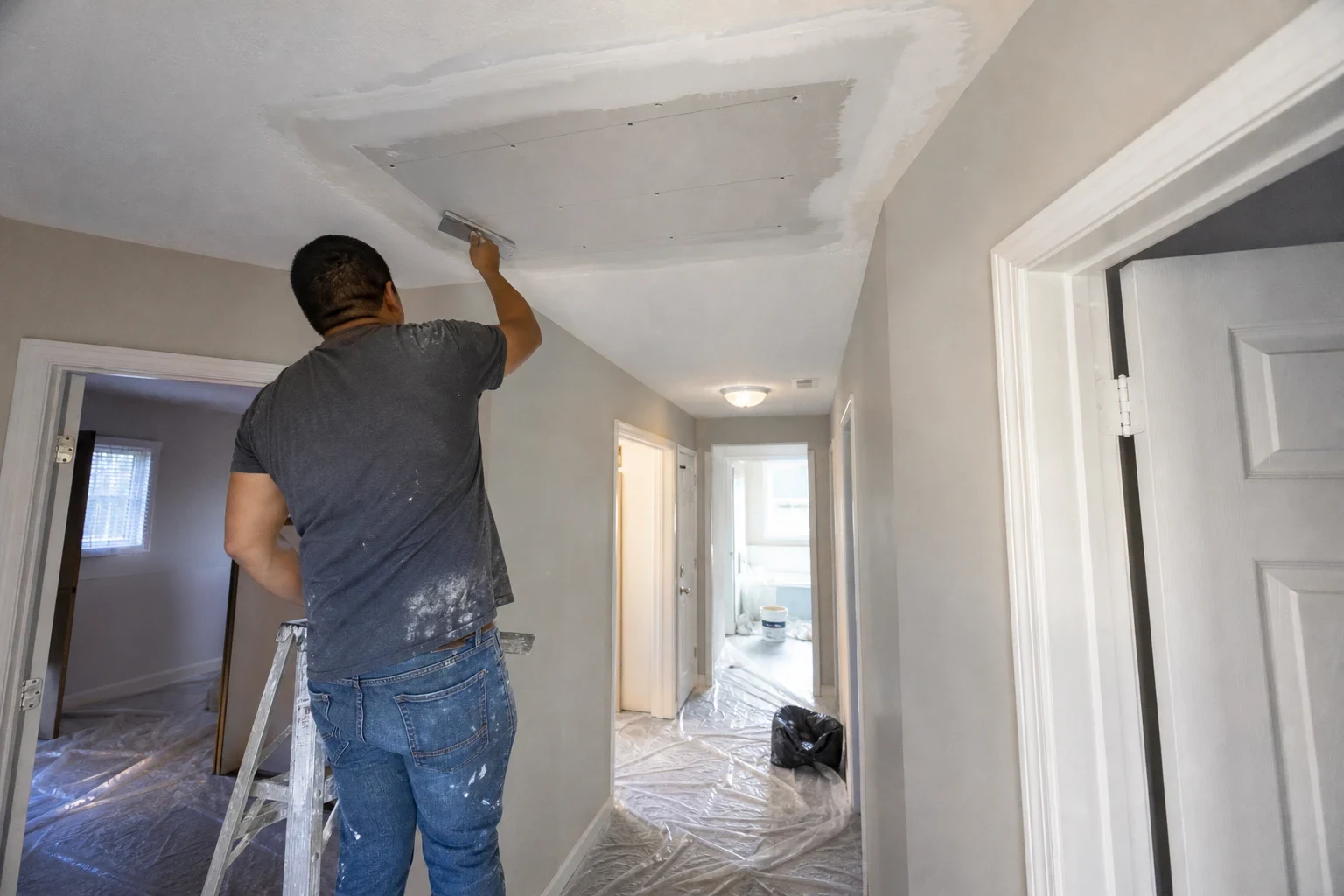
A crack over the bed, a brown ring under the bathroom, a seam that has started to drop. We find out why it happened, repair the drywall, match the texture, and check back once it has settled so you know the fix is holding.
Ceilings fail differently than walls
Gravity works against every ceiling. Drywall overhead carries its own weight, so a small leak, a loose screw line or a soft joint shows up as a sag or a crack long before a wall would complain. That is why ceiling repair starts with the cause, not the patch.
We look at what is above the damage before we cut anything: a bathroom, an attic, a duct run or an old repair that never held. If water is involved, we confirm the source has been dealt with and the framing is dry. Then we rebuild the area so it sits flat, blends with the rest of the ceiling and stays that way.
After the job, we follow up. We tell you how long the compound needs to cure, what hairline movement is normal in the first weeks, and what would be worth a call back.
What our ceiling repair covers
Finding the cause
We check for moisture with a meter, press along seams and look for nail pops or framing movement. You get a plain explanation of what we found and photos if it helps.
Cutting out damaged drywall
Water-softened or crumbling board is removed back to sound material and the nearest framing. Patching over weak gypsum only hides the problem for a season.
Re-securing sagging panels
Where a ceiling has dropped between joists, we lift it back into plane and fasten it with screws at proper spacing. Sometimes that is enough, sometimes the panel needs replacing.
Taping and finishing
Joints get paper or mesh tape, then thin coats of compound feathered wide so the repair disappears under raking light from a window.
Texture matching
Smooth, knockdown, orange peel or popcorn, we test the texture on a scrap first and adjust until it matches what is already overhead.
Primer and paint touch-up
New compound is primed so it does not flash through, then we touch up the repaired area with ceiling paint matched as closely as the existing finish allows.
Signs your ceiling needs attention
- Brown or yellow rings
- Stains mean water reached the drywall at some point. Even if it looks dry now, the paper face and gypsum may have weakened.
- A sag or bulge
- A ceiling that dips between joists is holding weight it was not built for, often water or failed fasteners. This one should not wait.
- Cracks along seams
- Straight cracks following a joint usually mean the tape has let go of the board. They tend to return if they are only caulked or painted.
- Nail pops in rows
- Small round bumps in a line point to fasteners backing out as framing dries and shifts with the seasons.
- Peeling or bubbling paint
- Paint lifting in one spot overhead often traces back to moisture behind it, especially under a bathroom or near an exterior wall.
How a ceiling repair visit runs
- 1
A conversation by phone
You describe what you are seeing and where. We ask about the room above and any recent leaks, then set a time to look at it in person.
- 2
Inspection and a written plan
We confirm the cause and the extent of the damage, then explain the repair in writing, including whether it is a patch or a panel replacement.
- 3
Protecting the room
Furniture is moved or covered, floors get drop cloths, and we seal off dust where we can. A clean work area matters more when the dust is falling from above.
- 4
Repair, cure and finish
Most ceiling repairs take more than one visit because compound needs drying time between coats. We sand with dust control, match the texture, prime and touch up.
- 5
The check-back
Once the repair has had time to settle, we reach out to ask how it looks and walk you through anything you have noticed. If something is not right, we come and look.
What moves the price of a ceiling repair
Every ceiling is priced after we see it, because the visible stain rarely tells the whole story. We give you a written estimate that lists each part of the work, so you know what you are paying for before we start.
- Size and number of areas
- One cracked seam is a short job. Several stains across a room, or damage that runs past a joist, takes more material and more coats.
- Height and access
- Stairwells, vaulted ceilings and rooms full of furniture need ladders, staging or extra setup time.
- Texture
- Smooth ceilings are the simplest to blend. Knockdown and popcorn finishes take test passes to match, and older popcorn texture may need testing before it can be disturbed.
- What is behind the drywall
- Wet insulation, damaged framing or an old patch that failed all add steps once the ceiling is open.
Ceiling repair questions
- Can you just paint over a water stain?
- Painting alone usually lets the stain bleed back through within weeks. If the drywall is still firm, we seal the stain with a stain-blocking primer and touch up. If it is soft or crumbly, that section needs to be cut out and replaced first.
- Will the repair show once it is done?
- Our goal is that you cannot find it from normal viewing distance. Texture matching and wide feathering do most of that work. Very old ceiling paint can age differently than fresh paint, and we will tell you up front if a slight sheen difference is likely.
- Do you fix the leak that caused the damage?
- No, we repair the drywall. We will help you confirm the area is dry and the source has been addressed before we close anything up, because repairing over an active leak wastes your money.
- How long will my room be out of use?
- Small patches can be finished over a couple of visits. Larger ceiling repairs need drying time between coats, so plan on the room being partly set up for several days. We leave the space tidy at the end of each visit.
- What should I watch for after the repair?
- A faint hairline at the edge in the first few weeks can happen as the compound finishes curing and the house moves with the season. A new stain, a soft spot or a crack that keeps growing is worth a call. We cover this with you during our check-back.
Let's look at that ceiling
Tell us what you are seeing overhead and we will set a time to inspect it, explain the repair and follow up once the work has settled. We serve Garfield and nearby towns including Lodi, Elmwood Park and Clifton.