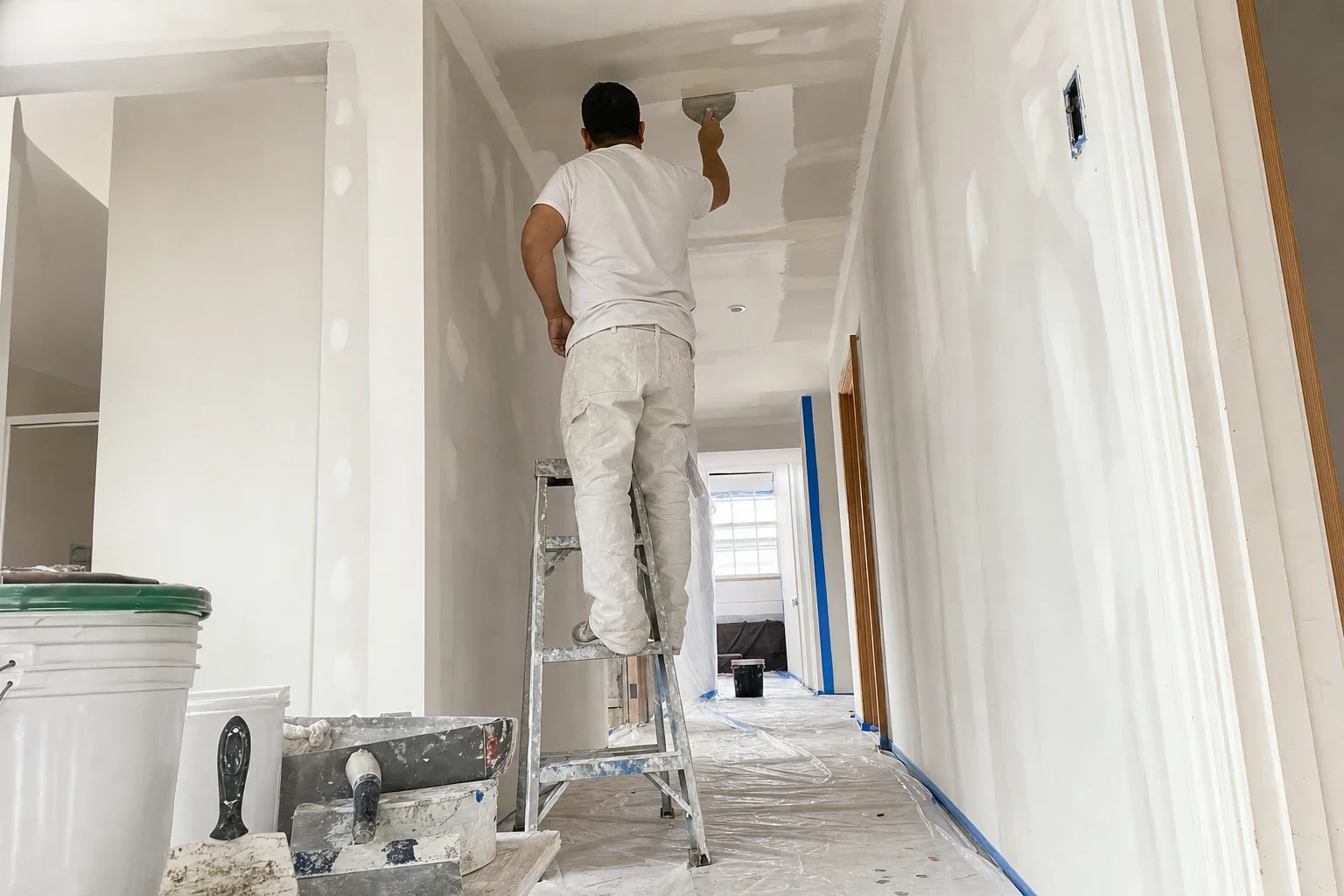
Drywall Repair in Garfield, Finished With Care
We repair damaged drywall and ceilings, hang and finish new board, and blend paint touch-ups so the patch disappears into the wall. When the job is done, we check back to see how the work has settled and explain how to look after it. We work across Garfield, Lodi, Elmwood Park and nearby towns.
- Written line-item estimates
- Clean work area each day
- Check-back on finished work
- Texture matched by hand
Our Service Area
Our base is Garfield, NJ, and we work in houses and rental units throughout the nearby area: Passaic, Lodi, Elmwood Park, Saddle Brook and Wallington, plus Paterson, Clifton, Hackensack, Teaneck and Fair Lawn.
- Garfield
- Passaic
- Lodi
- Elmwood Park
- Saddle Brook
- Wallington
- Paterson
- Clifton
- Hackensack
- Teaneck
- Fair Lawn
Don't see your town? Call and tell us about the job. Wherever we take on work, the follow-up visit comes with it.
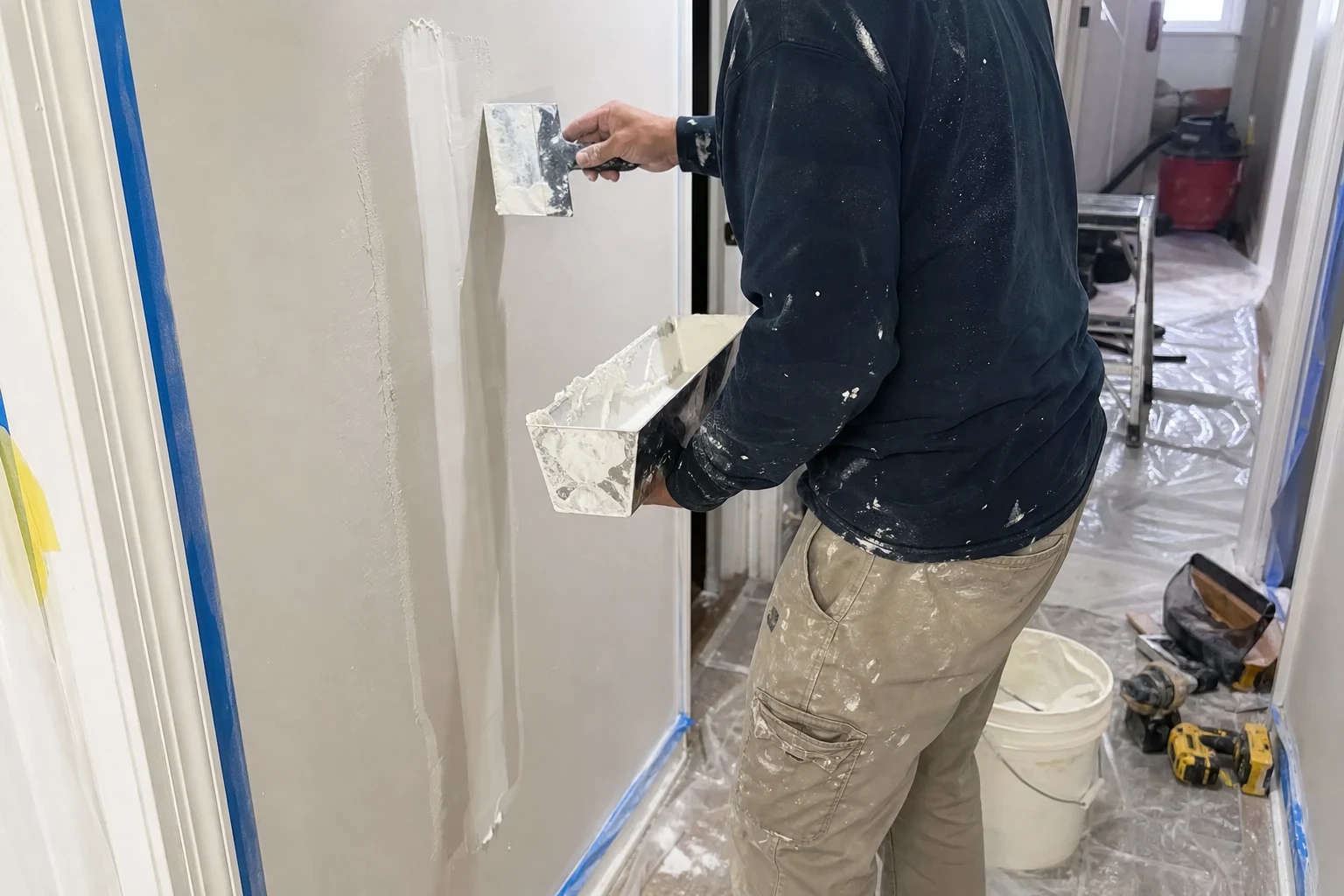
Wall and Ceiling Work We Take On
Many calls begin with something minor: a hole from a doorknob, a popped nail, a crack spreading from a window corner. That kind of damage is what our drywall repair and drywall patching handle, while wall repair and ceiling repair cover damage that is bigger or keeps returning. For new rooms and replaced sections, we do drywall hanging and drywall finishing up to a smooth, ready surface. Surface preparation and sanding and paint touch-ups finish things off so the repaired spot matches the wall around it.
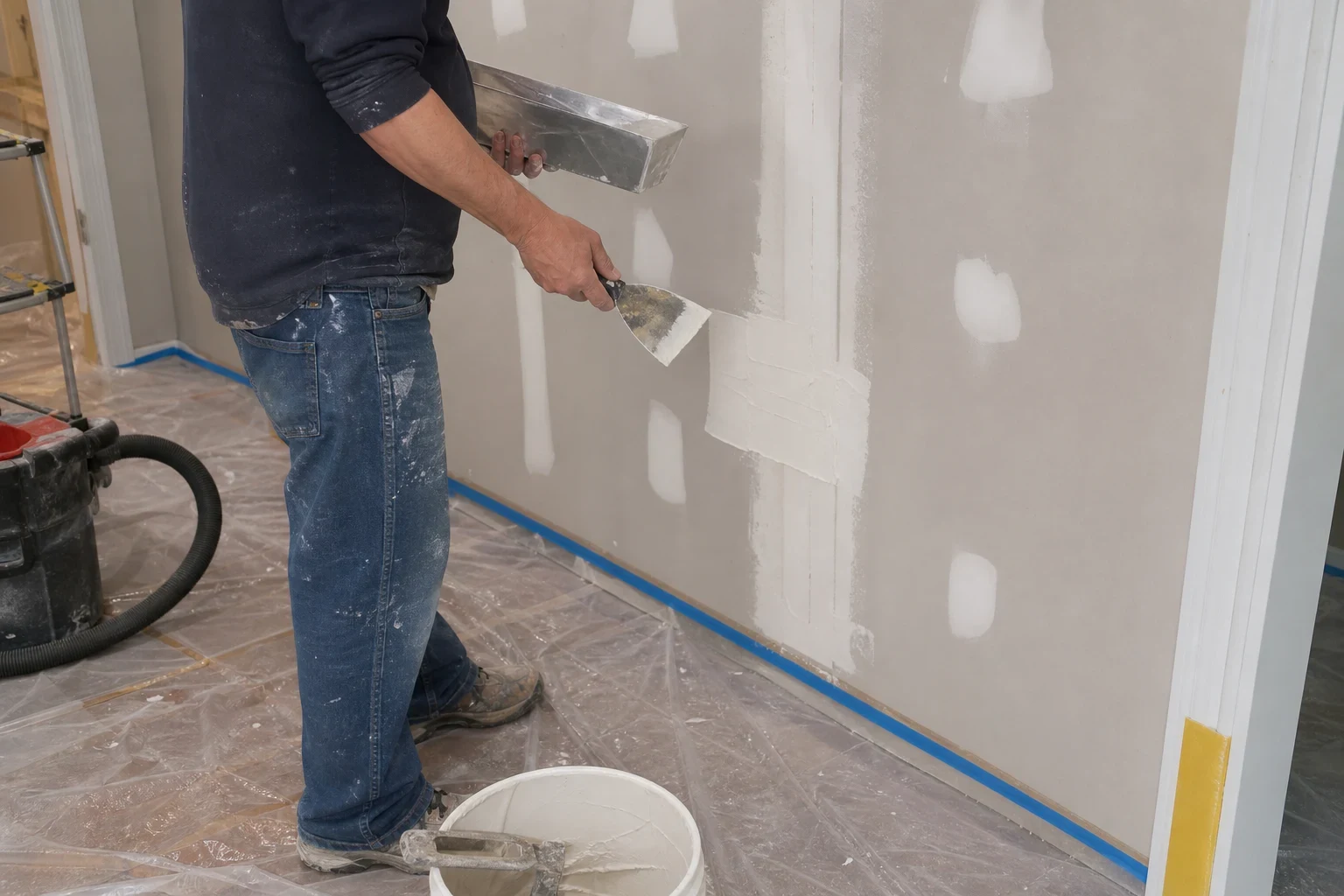
Drywall Repair
Cracks, holes, popped screws and stained board repaired, finished smooth and checked again once the job is done so the fix holds up.
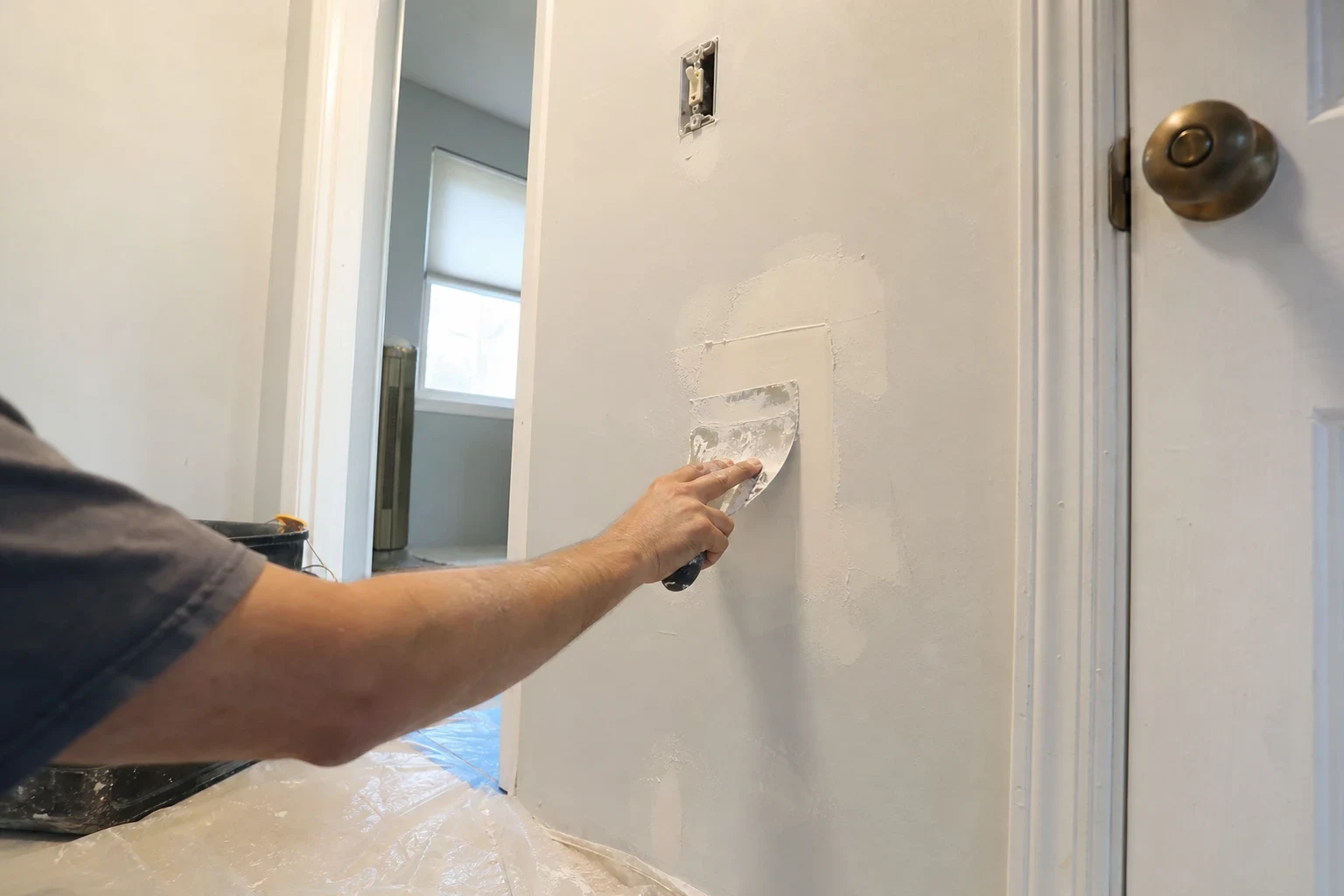
Drywall Patching
Doorknob holes, anchor scars and dented corners patched with proper backing, matched texture and a check-back once the compound has settled.
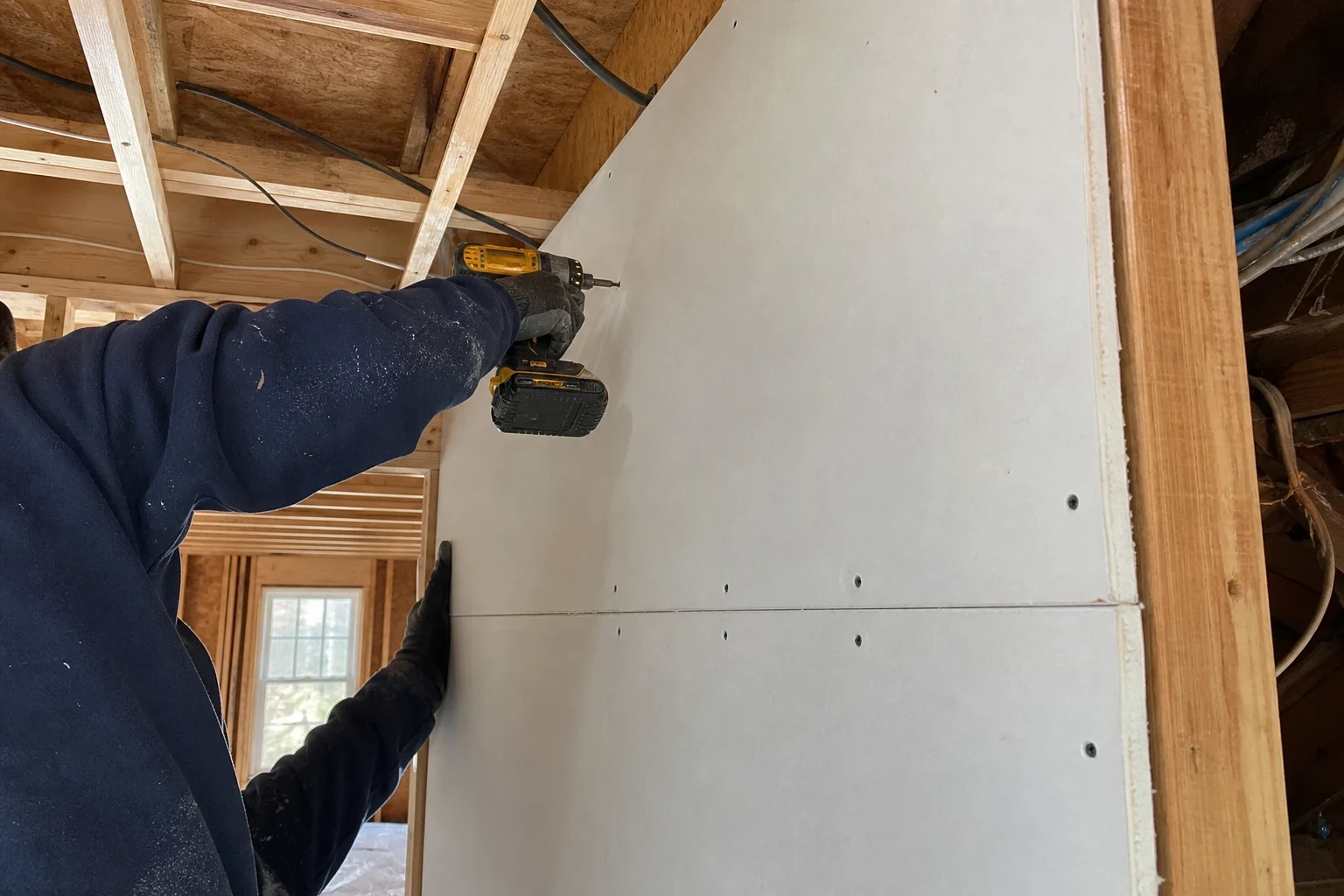
Drywall Hanging
New board hung on walls and ceilings with the right thickness for each room, staggered seams and careful fastening, followed by a check-in once the job settles.
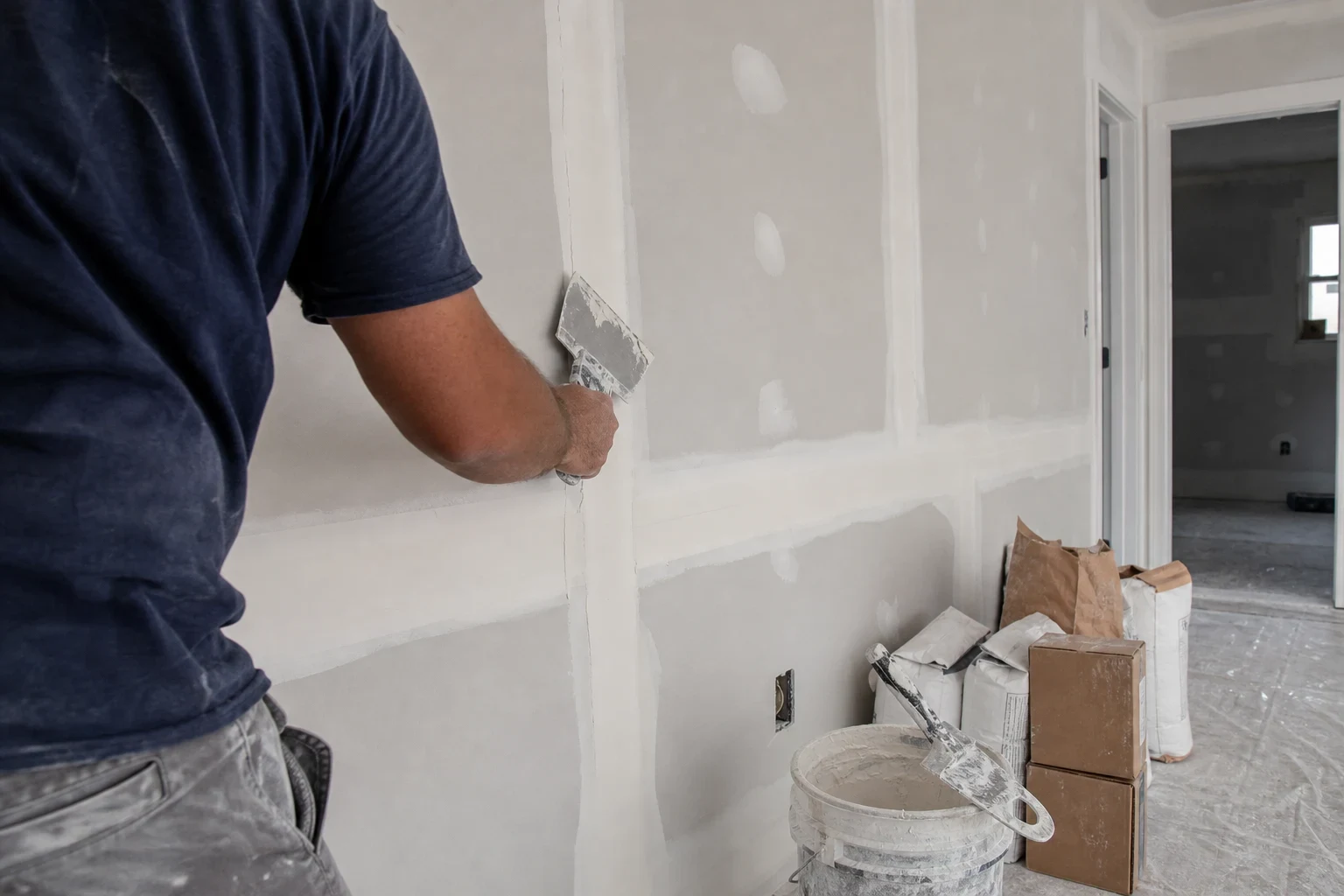
Drywall Finishing
Taping, coats of joint compound and careful sanding that turn hung sheets into smooth walls and ceilings, ready for primer and paint.
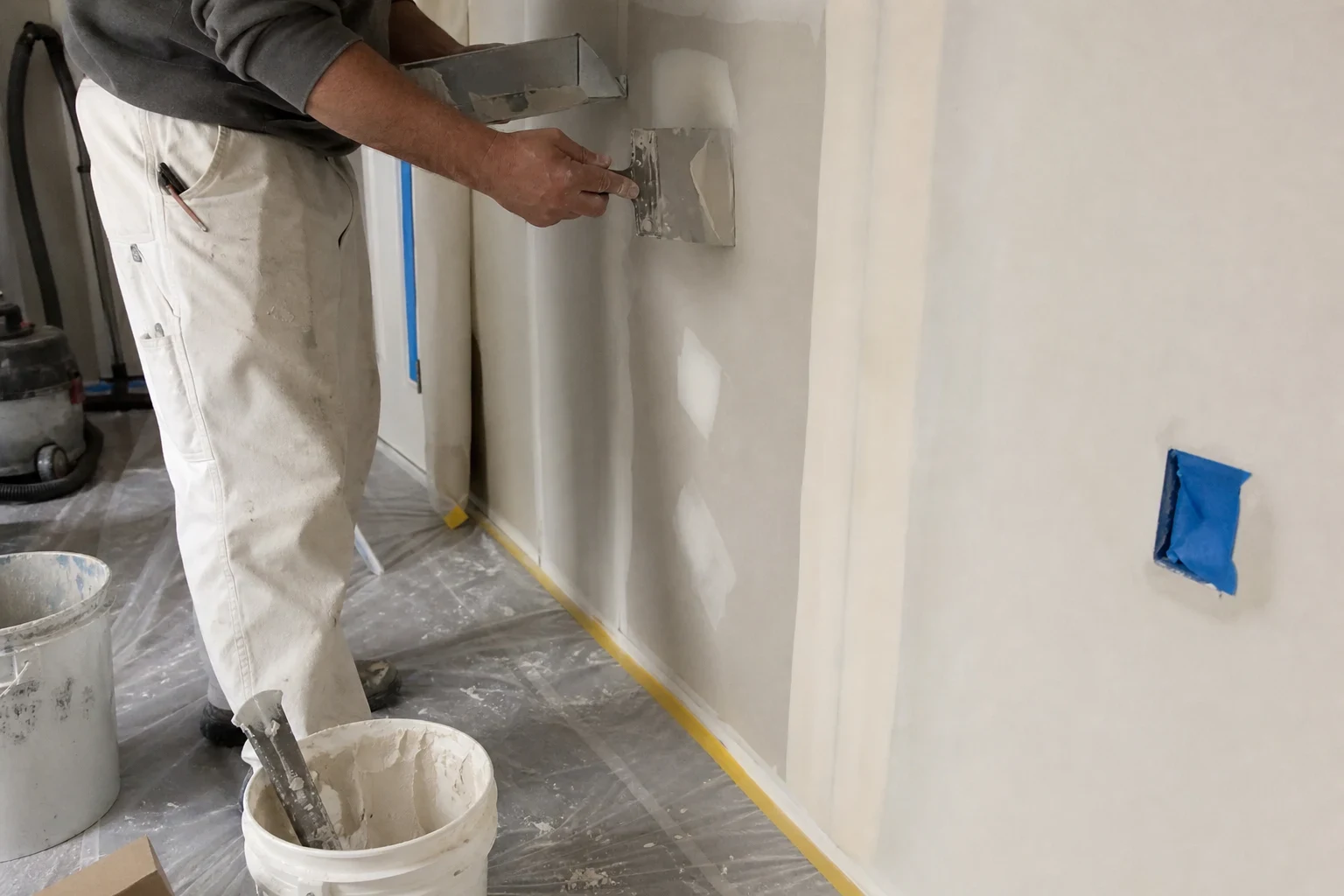
Wall Repair
Cracks, holes, dents and loose tape on drywall or plaster walls, repaired and blended so the wall reads as one surface again.
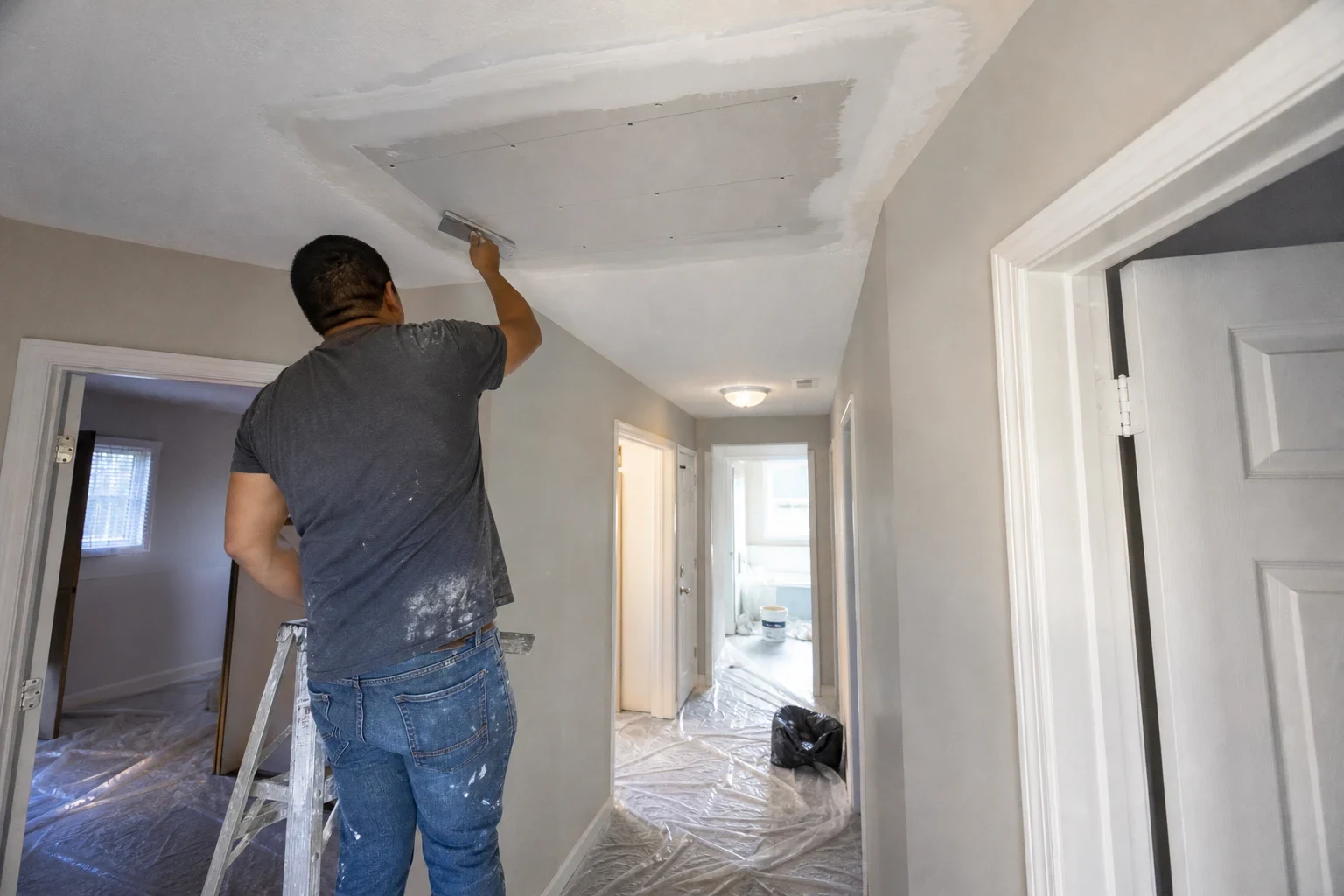
Ceiling Repair
We fix cracked, stained and sagging ceilings, match the existing texture, and check back afterward to make sure the repair is holding.
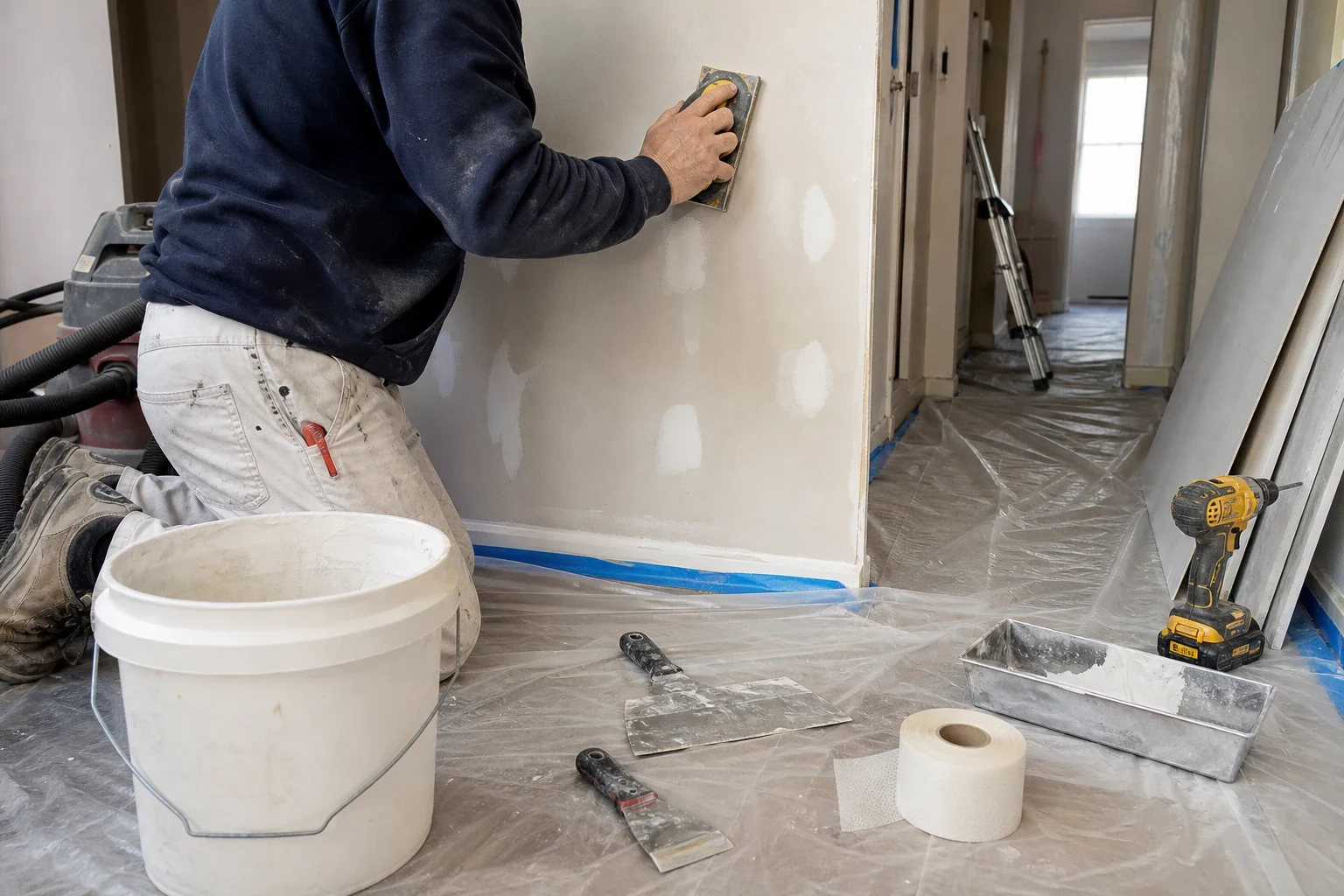
Surface Preparation and Sanding
Scraping, filling, skim coating and fine sanding that leave walls and ceilings flat, primed and ready for a new coat of paint.
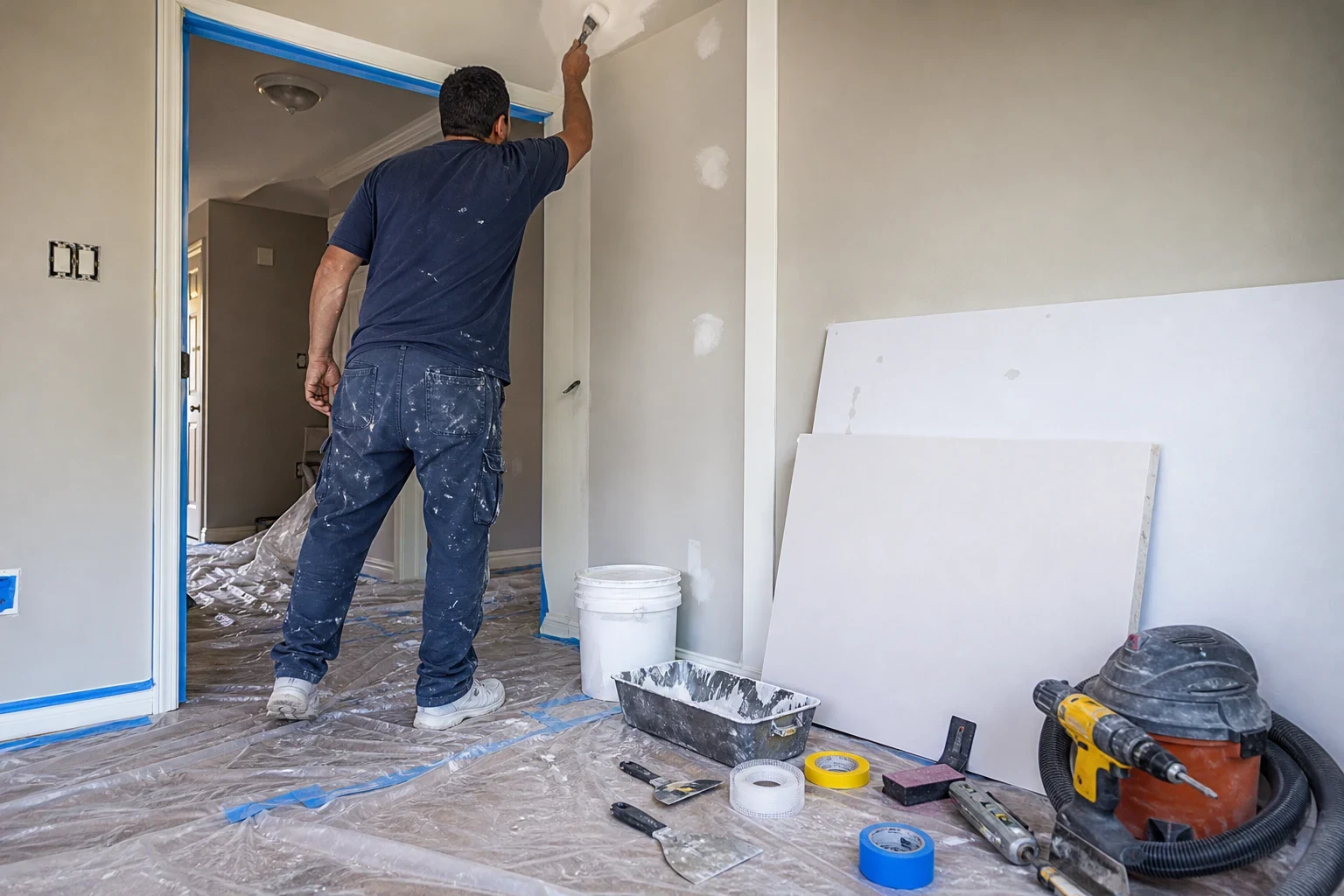
Paint Touch-Ups
Small areas of paint matched for color, sheen and roller texture so repairs and scuffs disappear, with care advice and a check-back once it cures.
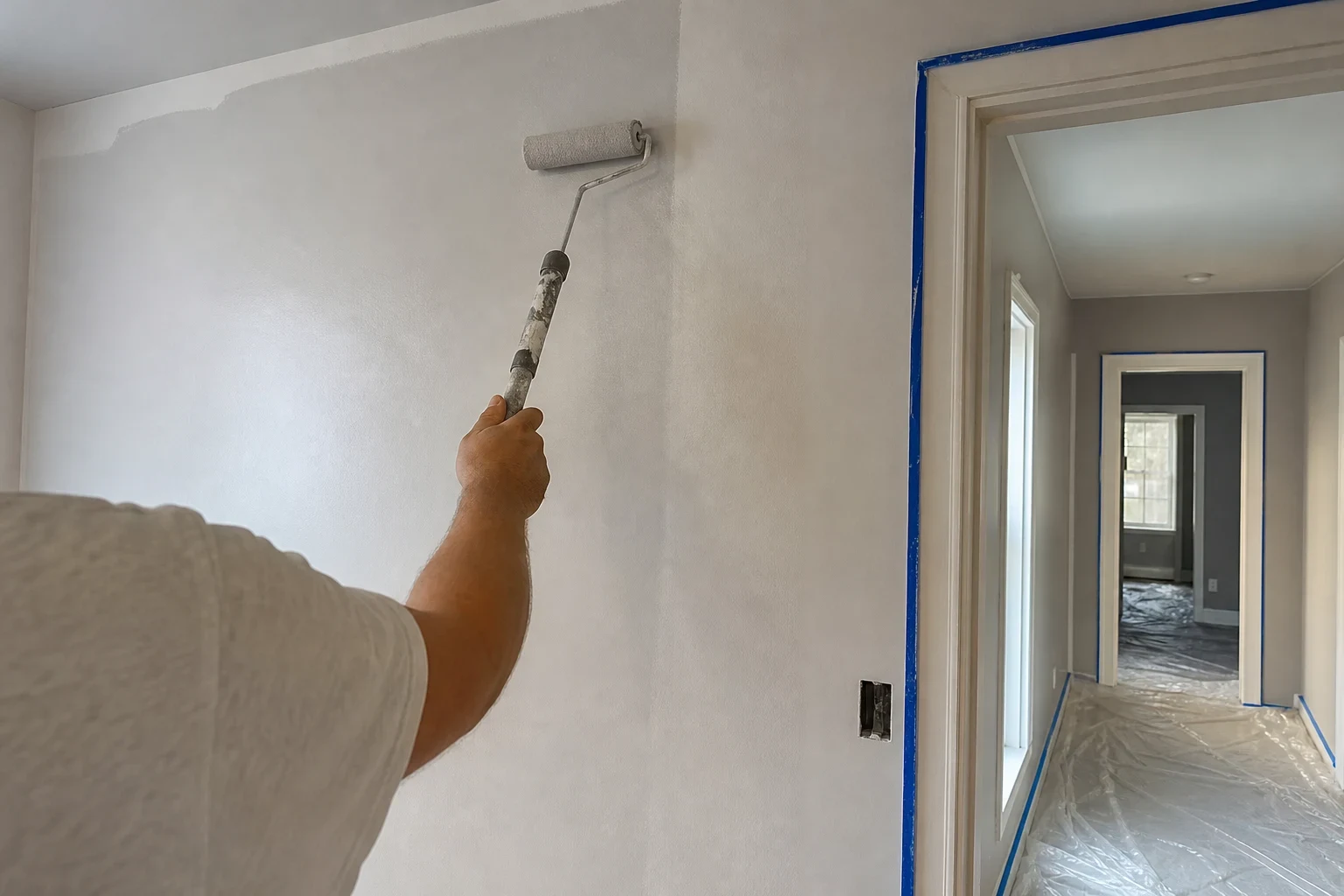
Wall Prep for Repainting
Before a room is repainted, we repair and sand the drywall and prime the patches so the new color goes on smooth and the old damage stays hidden.
What Working With Us Looks Like
Most of good drywall work comes down to patience: the correct compound, real drying time and a light hand with sanding. We keep in touch after the final coat too, since some issues only appear weeks later.
- 01
A return look at the work
Some weeks after the job, we get in touch to see how the repair has held up through drying and a temperature change. If a seam has started to shadow or a screw has popped, we want to know and come see it. That visit is part of finishing the job, not an add-on.
- 02
Practical care advice
Before leaving, we tell you how long to wait before hanging pictures, how to clean the new surface and what a fine crack near the patch does and does not mean. New joint compound needs time and steady humidity, and a few minutes of talk spares you a lot of worry.
- 03
Texture matched with care
A smooth wall, light orange peel, knockdown or an older hand-troweled finish each call for a different method. We try the texture on scrap board first, then apply it to your wall so the repair looks like part of the original surface.
- 04
A tidy work area
Floors and furniture get covered, doorways get plastic during sanding, and we use dust-collecting sanders where the job allows. Each day ends with the room swept and ready to use.
- 05
An honest call on repair or replacement
When a patch will last, we tell you. When the board is soft, crumbling or water-damaged under the paper, we show you photos and explain why replacing that section makes more sense.
How a Job Runs, Start to Finish
Most repairs take more than one visit because joint compound has to dry between coats. Here is what to expect.
- 1
A phone conversation
You tell us what happened and where. The size of the damage, the room it is in and how long it has been there help us plan the right approach.
- 2
A look at the wall and a written estimate
We check the damage, look for moisture and note the texture. You get a line-item estimate and a realistic schedule.
- 3
Protect, repair and coat
We cover the area, cut out damaged board where needed, set the patch or new drywall and apply tape and compound. Each coat dries fully before the next.
- 4
Sanding and paint touch-up
We sand the final coat smooth, prime the new compound and blend a paint touch-up over the repair. Then we clean up and walk the room with you.
- 5
Care advice and a check-back
We explain how to care for the new surface, then follow up a few weeks later to make sure it has settled the way it should.
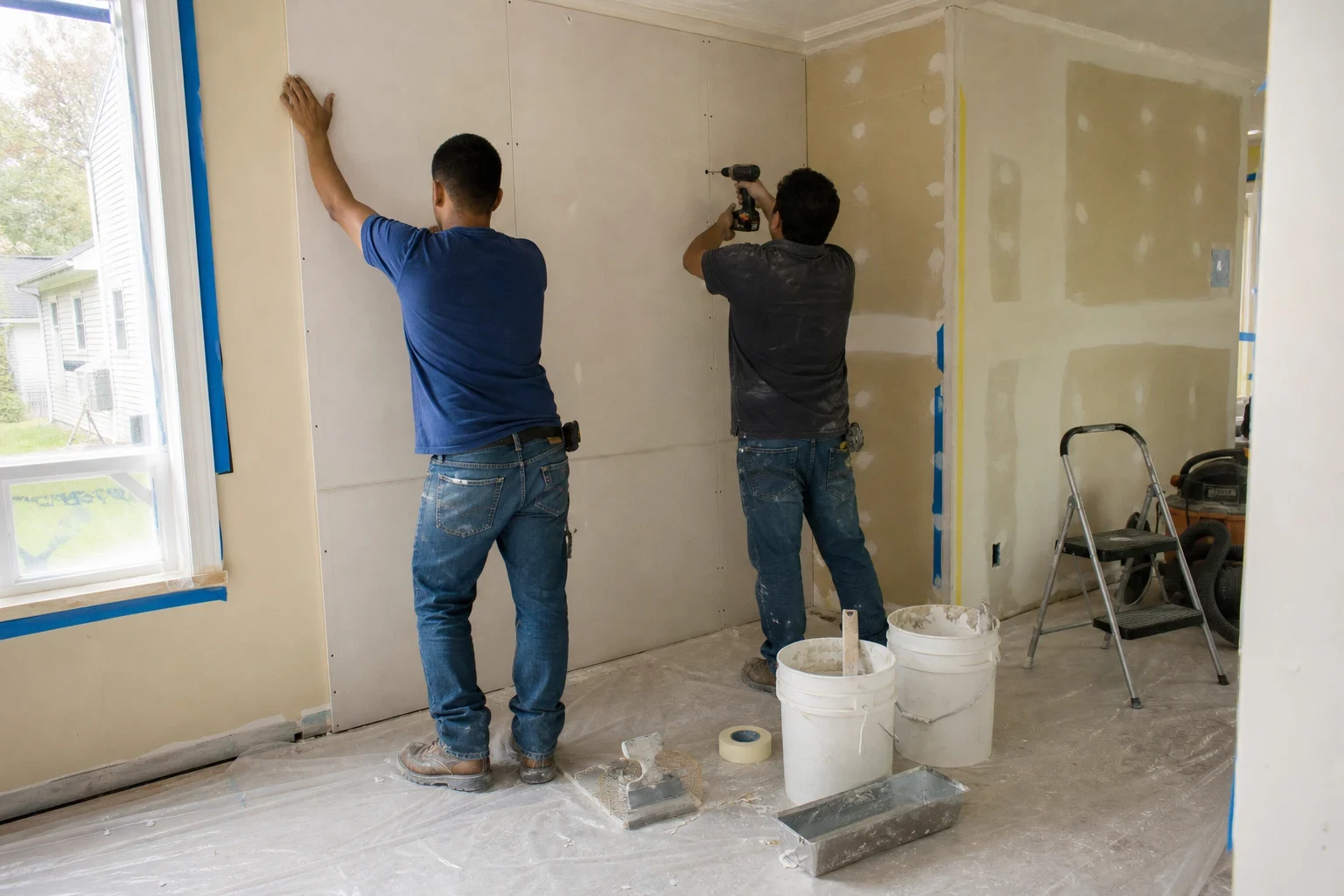
A Small Drywall Company That Stays in Touch
Drywall Repair Garfield focuses on one thing: walls and ceilings that look right and stay that way. We work slowly where it matters, using setting compound for deep fills, lighter topping compound for finish coats and enough drying time between them.
Many homes around here mix original plaster with later drywall, and houses go from humid summers to dry, heated winters. Seams and patches can move a little as the seasons change. That is why we check back on finished jobs and give you plain guidance on what is normal and when to call us again.
What Goes Into the Price of Drywall Work
Two holes of the same size can carry different prices. The cost depends on the work each one needs, and we go through every part of it when you get your quote by phone or after we see the wall.
Before work begins, you get a written estimate split into line items. If we run into something unexpected, we stop, show it to you and agree on any change before going on.
- How many repairs, and how big
- A single small patch goes quickly. A room with several repairs, or a full sheet to replace, uses more material and more coats of compound.
- Wall work or ceiling work
- Ceiling repair means slower work overhead. It takes more setup, closer attention to drying and often extra sanding before the surface looks flat under raking light.
- Texture and level of finish
- A smooth wall hit by strong side light needs more finish coats than a closet wall does. Matching a specialty texture takes extra time as well.
- Hidden conditions
- Wet insulation, damaged framing or old plaster beneath the drywall can change the job. We tell you what we find before we do any additional work.
- Reaching and setting up the room
- Stairwells, tall ceilings and furnished rooms take longer to cover and reach. A cleared space keeps the job shorter.
What Homeowners and Landlords Want to Know
Something not covered here? (973) 755-1802
Will I be able to tell where the repair was?
It should blend in when the work is done right. We spread compound well beyond the damage, match the texture already on the wall and blend paint over the spot. If your paint is old and faded, we let you know before we start that a perfect color match may not be possible.
How long does the job take?
Even a small patch usually takes two or three short visits, since every coat of compound has to dry before the next. Bigger repairs and new drywall hanging run longer. Your estimate comes with a schedule so you can plan your days.
Will there be a lot of dust?
Sanding always makes some dust, but we keep it in the work area. Floors and furniture get covered, doorways get plastic, and we use sanders that collect dust when the job allows. We clean the room before leaving each day.
Can a ceiling with a water stain be repaired?
Yes, after the leak is fixed and the area has dried out. We test whether the board is still firm. If it is, we seal the stain with a stain-blocking primer and touch it up. If it sags or feels soft, we cut that section out and put in new board.
Can you help with an insurance claim?
We can walk you through the repair, photograph the damage and write up a line-item estimate you can send to your insurer. We are not the adjuster, and your insurance company decides what is covered.
What happens once the work is finished?
We explain how to treat the new surface, like holding off on heavy wall hangings and cleaning lightly for the first few weeks. Later we check back to see how the repair has settled, and if something looks wrong, we come out to see it.
Why does a crack keep showing up in the same spot?
A crack that returns is usually a sign of movement: a seam that was taped poorly, framing that shifts from season to season or fasteners that have loosened. We track down the cause, retape with proper materials and refasten the board rather than filling the crack one more time.
Ready to Have That Wall Looked At
Tell us what happened and where, and we will explain the repair, the timeline and what it will take. Once the work is done, we check back to make sure it holds up.